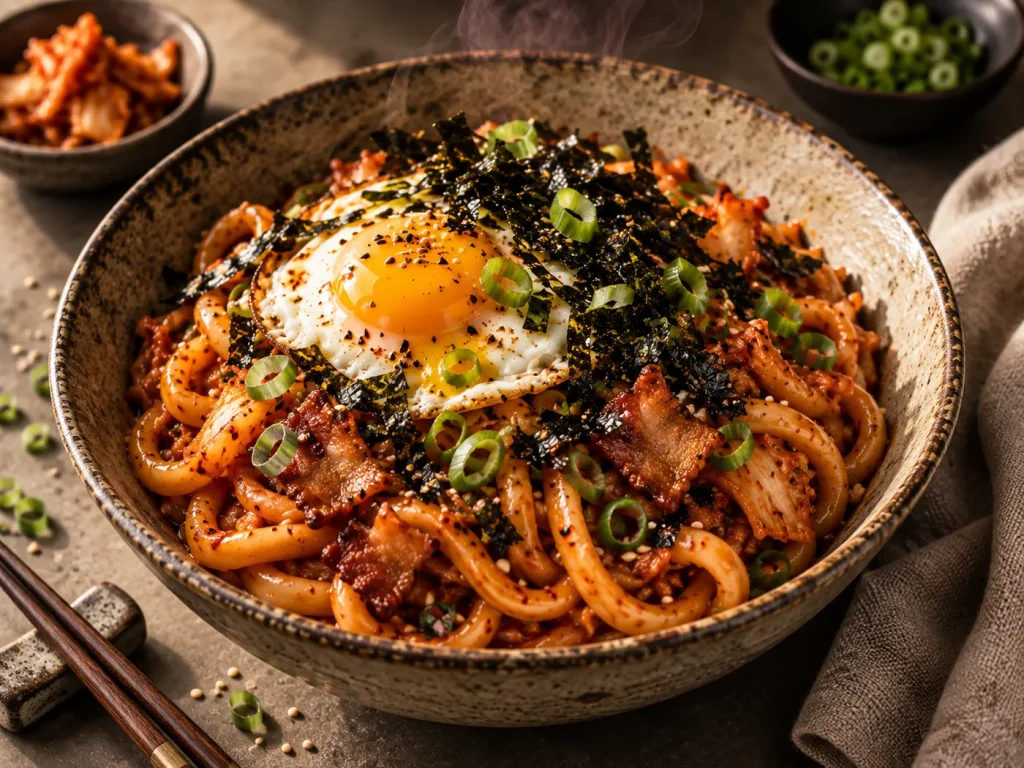
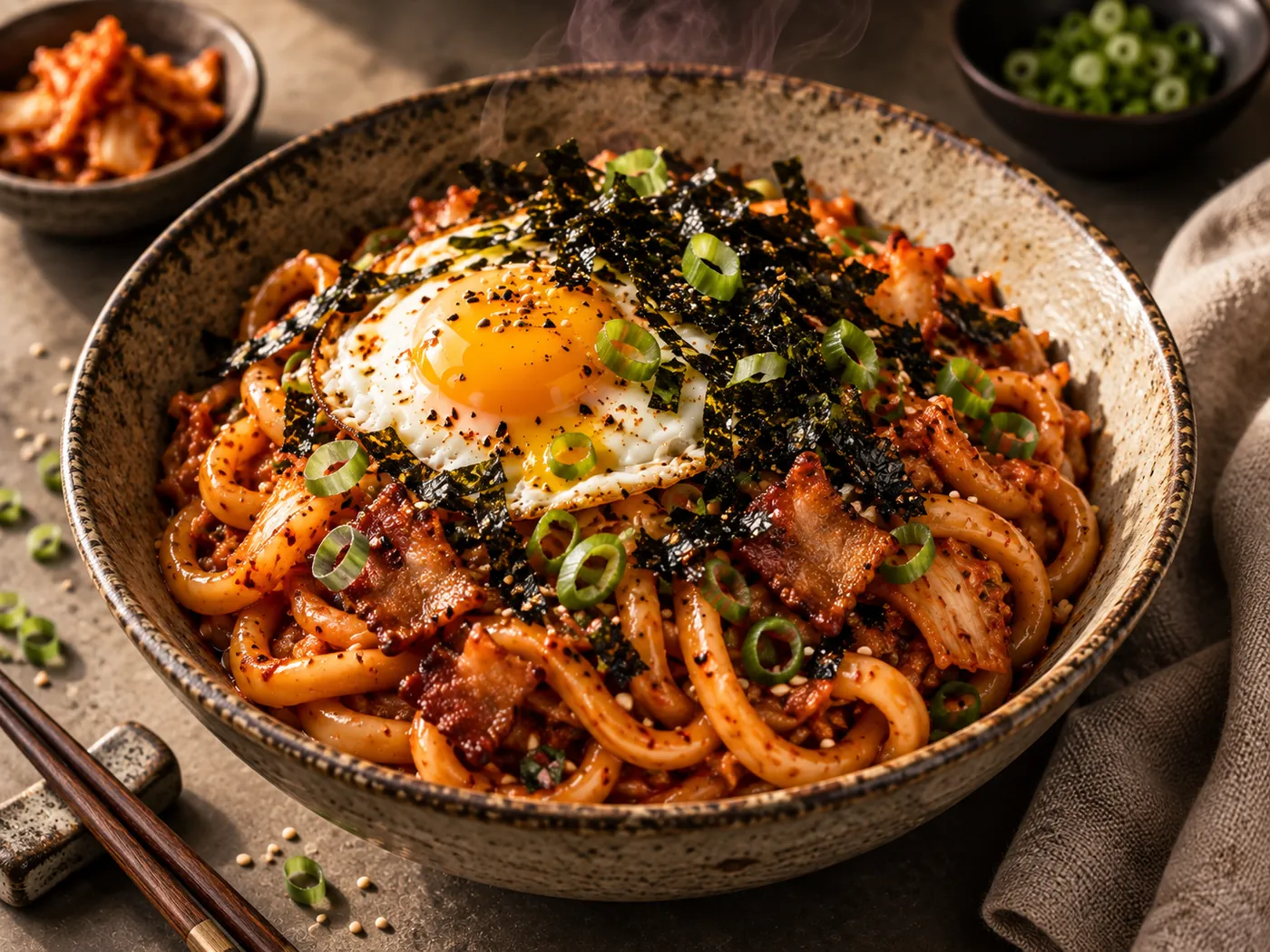
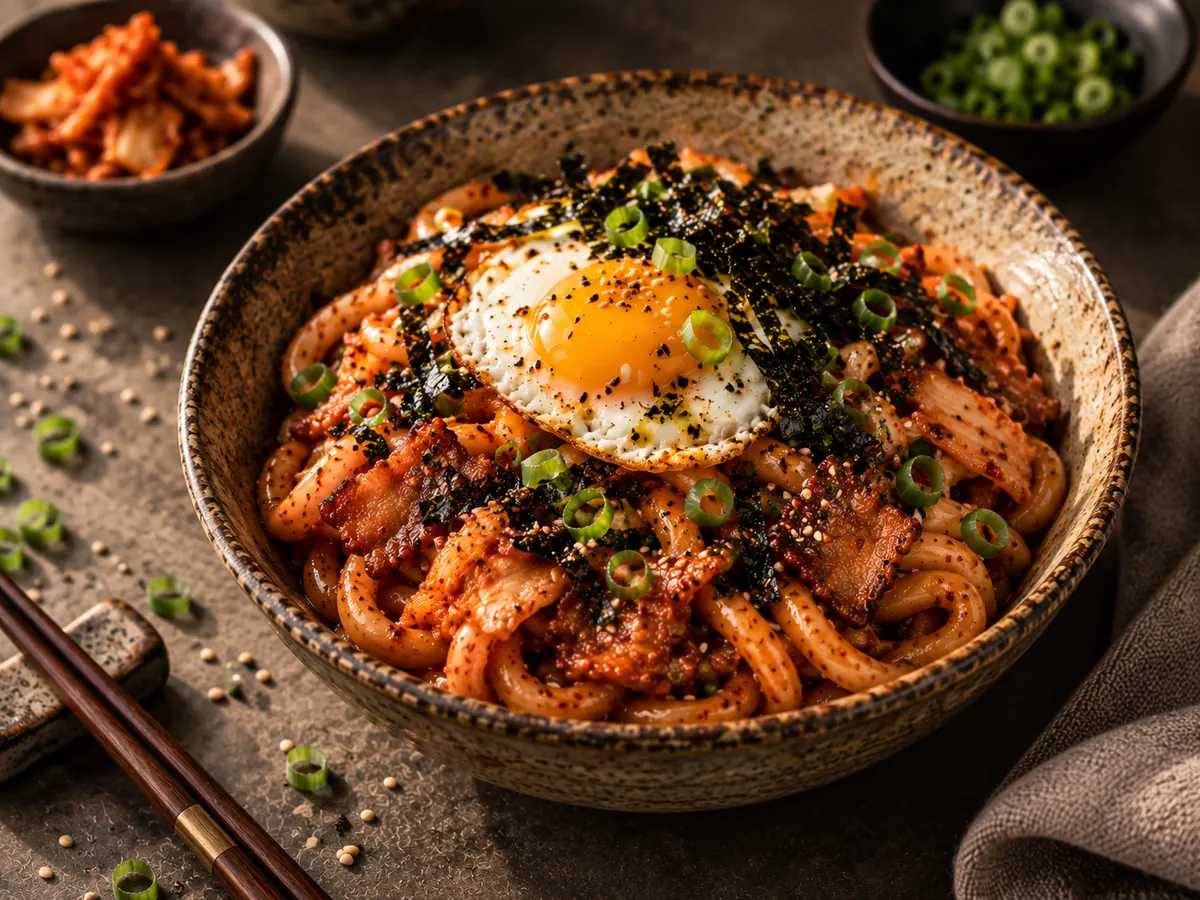
This is the kind of dinner I make when there is half a jar of kimchi in the fridge and I want something hot, chewy, and fast. Bacon gives the pan enough fat to fry the kimchi properly, while gochujang and a splash of hot sauce make the noodles taste deeper and brighter at the same time. I finish the bowl with a fried egg and a generous handful of gim so every bite gets a little crisp, salty seaweed.
Hot Sauce Gives Kimchi Udon a Cleaner Heat
Gochujang brings body and sweetness, but too much can make stir-fried udon feel heavy. A small amount of vinegar-forward hot sauce sharpens the sauce instead. Start with 1 teaspoon, taste after the noodles are coated, and add the second teaspoon only if you want more heat.
Spicy Kimchi Udon with Bacon, Hot Sauce & Gim
Chewy udon with bacon, kimchi, gochujang, hot sauce, fried egg, and crisp gim.
Equipment: Wide skillet, saucepan or pot, nonstick pan, tongs or chopsticks.
Allergens: Wheat, egg, soy, and possibly shellfish if using oyster sauce.
Measurements: Ounces below are weights, not fluid ounces.
Cook the bacon until browned and fully heated through. Keep eggs refrigerated until cooking, and refrigerate leftovers within 2 hours.
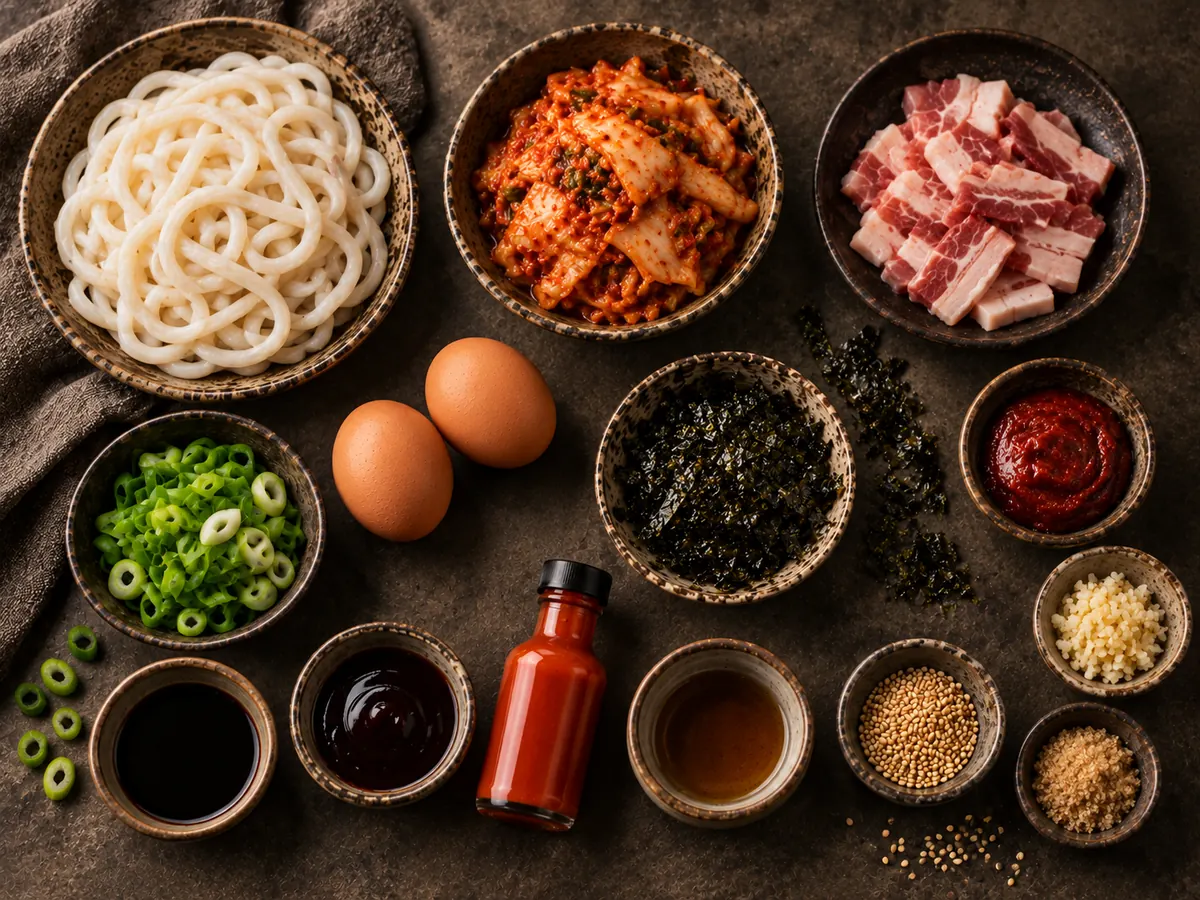
🛒 Ingredients (Dual Measurements)
- 400 g (14 oz) fresh or frozen udon noodles, 2 portions
- 100 g (3.5 oz) thick-cut bacon, cut into bite-size pieces
- 180 g (6.3 oz / about 1 1/4 cups) well-fermented kimchi, roughly chopped
- 10 g (2 cloves) garlic, finely chopped
- 20 g (about 1 tbsp) gochujang
- 5–10 ml (1–2 tsp) vinegar-forward hot sauce, to taste
- 10 ml (2 tsp) soy sauce
- 10 ml (2 tsp) oyster sauce
- 30 ml (2 tbsp) kimchi juice or water
- 5 g (1 tsp) brown sugar or honey
- 5 ml (1 tsp) toasted sesame oil
- 2 large eggs
- 2 scallions, thinly sliced
- 8 g (about 1/2 cup loosely packed) roasted gim, cut or crumbled into thin strips
- 1 tsp toasted sesame seeds
Step-by-Step Instructions
- Step 1: Loosen the udon. Bring a pot of water to a boil. Add the udon and cook just until the strands separate—usually 30–60 seconds for fresh or frozen noodles. Drain well and set aside. Do not overcook; the noodles finish in the skillet.
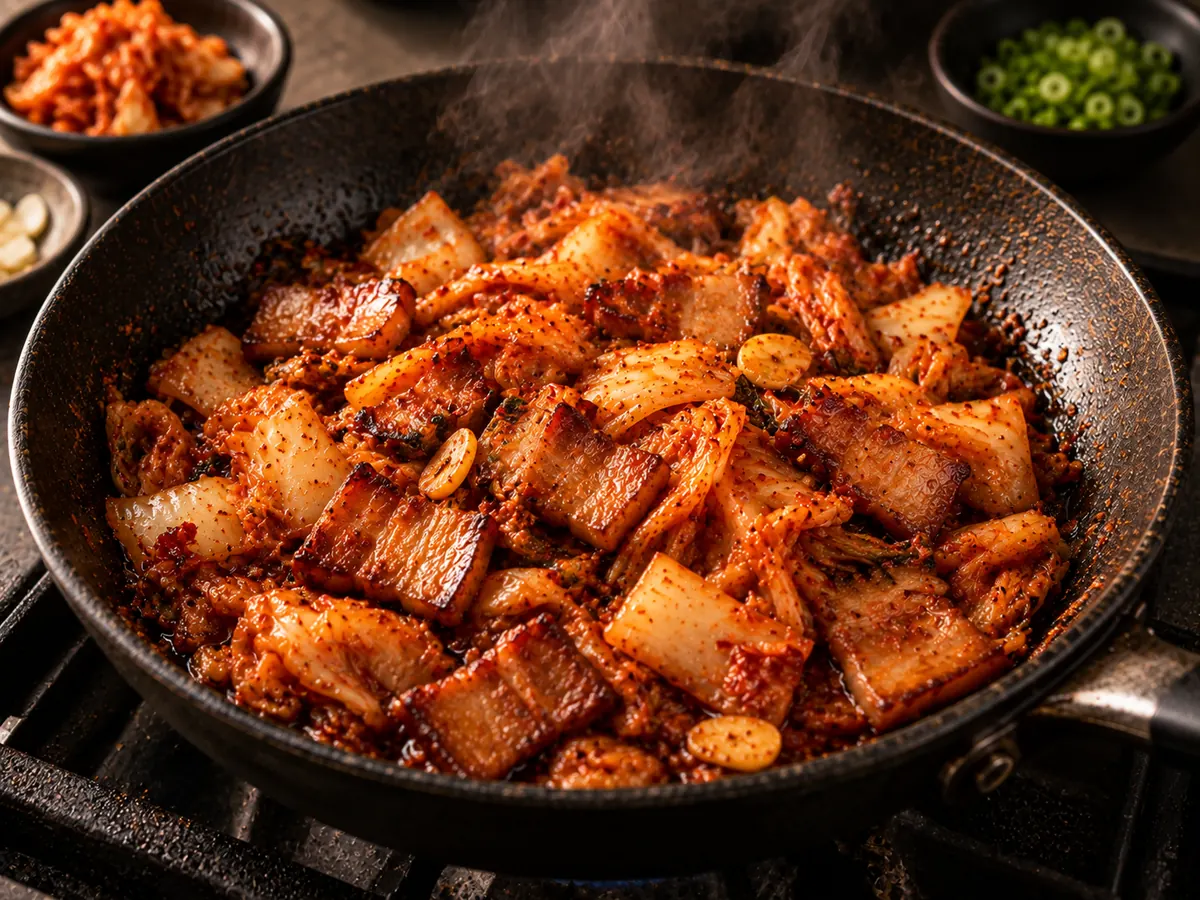
- Step 2: Crisp the bacon and fry the kimchi. Set a wide skillet over medium heat. Cook the bacon until browned at the edges and some fat has rendered, 4–5 minutes. Add the kimchi and garlic and fry for another 2–3 minutes, stirring often, until the kimchi smells sweeter and the pan looks glossy.
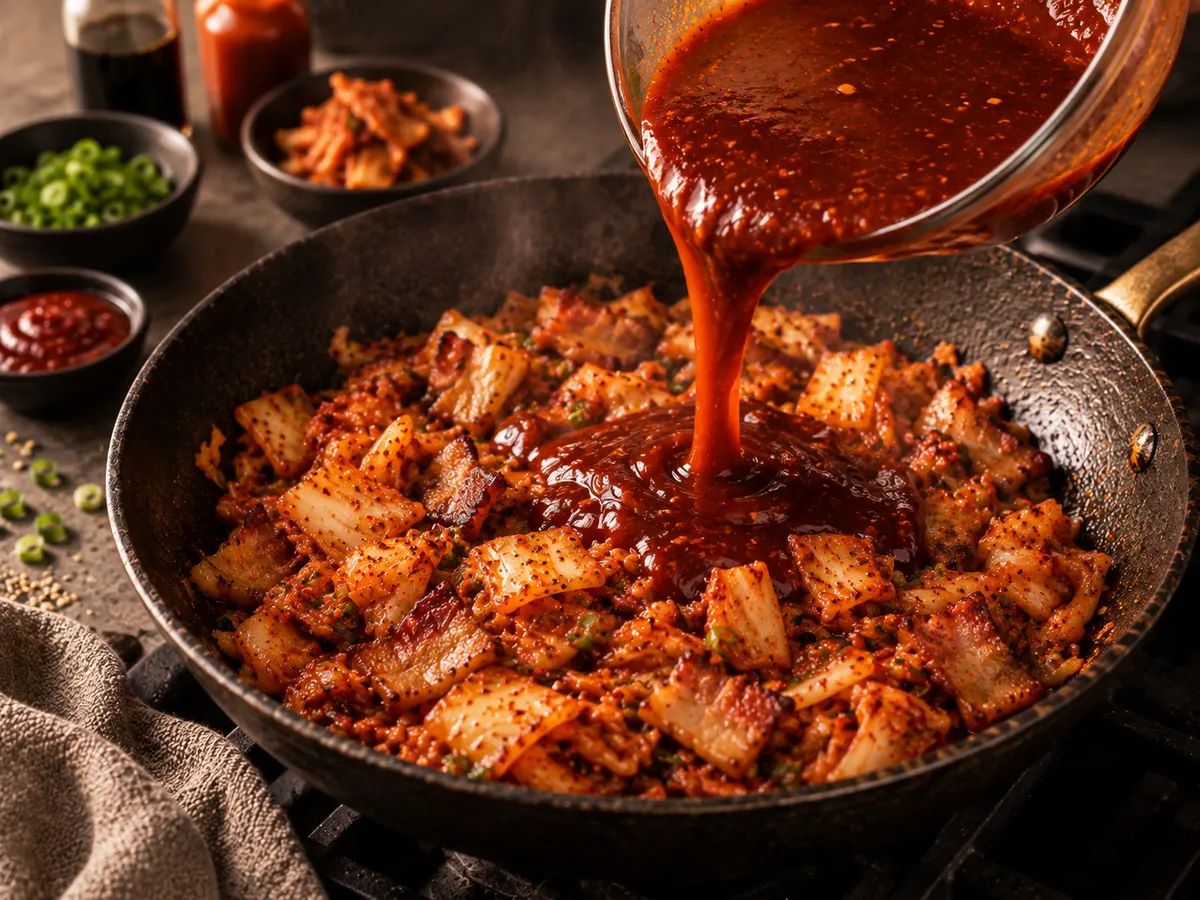
- Step 3: Mix and add the hot sauce mixture. Stir together the gochujang, 1 teaspoon hot sauce, soy sauce, oyster sauce, kimchi juice, and brown sugar. Pour it into the skillet and stir for 20–30 seconds so the sauce loosens into the bacon and kimchi.
- Step 4: Toss in the udon. Add the drained noodles and toss over medium-high heat for 1–2 minutes. Let the noodles pick up the sauce before adding the sesame oil. Taste and add the second teaspoon of hot sauce only if you want it hotter.
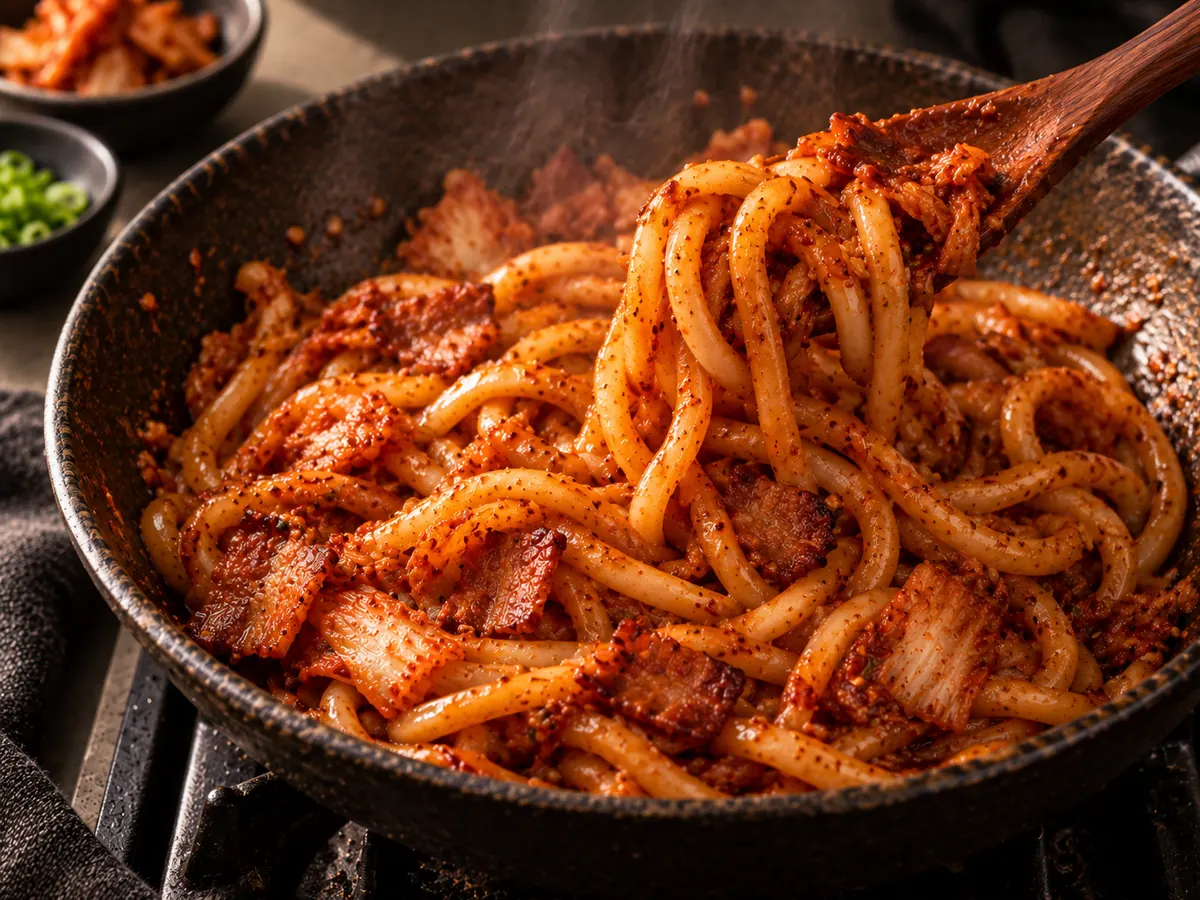
- Step 5: Fry the eggs and finish with gim. Fry the eggs sunny-side up in a separate nonstick pan. Divide the udon between two bowls, top each with an egg, scallions, sesame seeds, and plenty of gim. Serve immediately while the seaweed is still crisp.
Join K-Taste Food
Sign in with Google to explore exclusive Korean recipes, create custom meal plans, and get instant updates.
A Few Small Things That Make It Better
Use kimchi that has had time to sour; fresh kimchi tastes flatter once it hits the skillet. Do not simmer the udon in the sauce for long—the noodles should stay bouncy. And be generous with the gim. It is not decoration here; the roasted seaweed is part of the seasoning.
More recipes to cook next
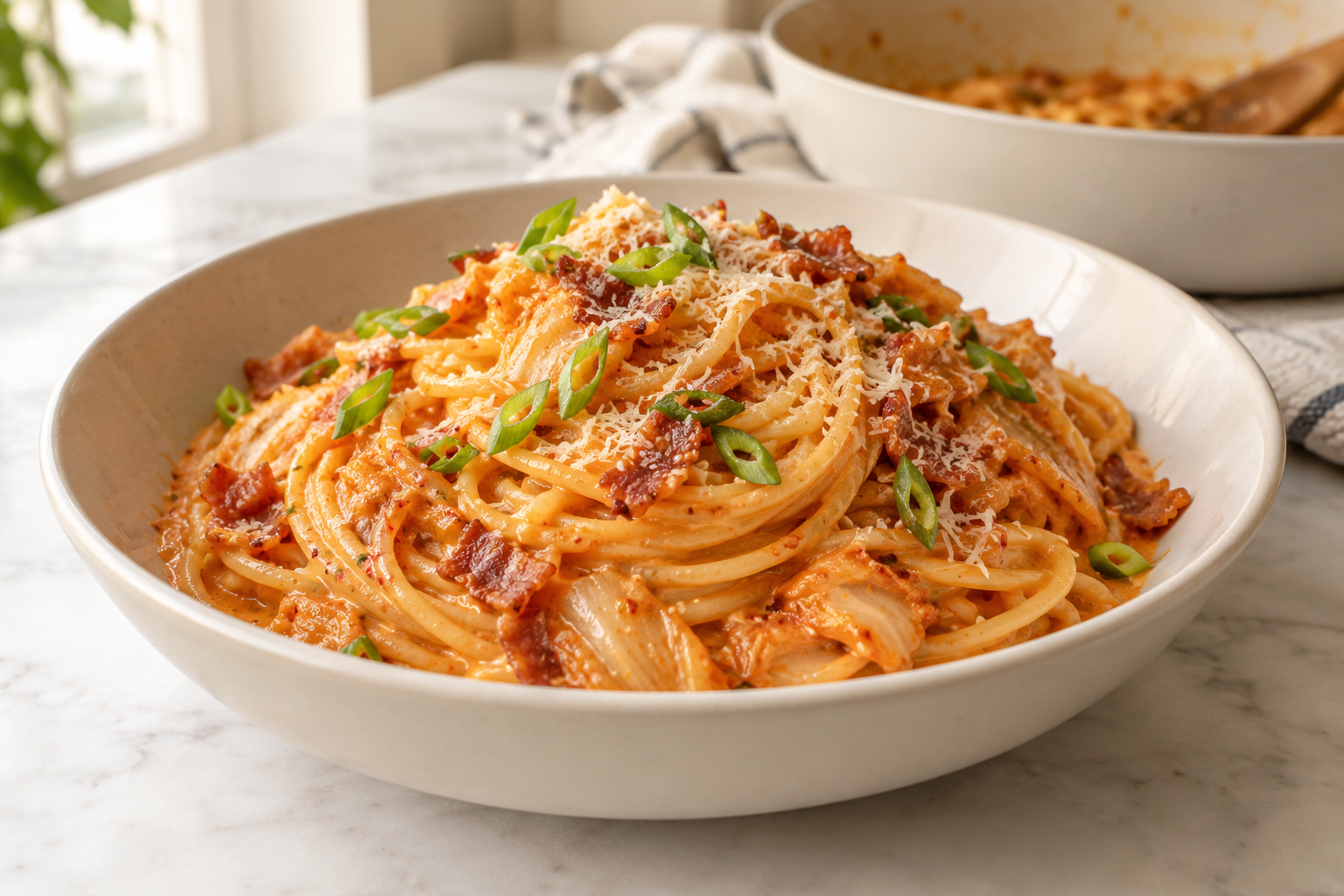
Creamy Kimchi Pasta with Bacon
Noodles · 30 min

The Ultimate Kimchi Fried Rice: An Authentic & Organic Korean Comfort Meal
Rice · 25 min
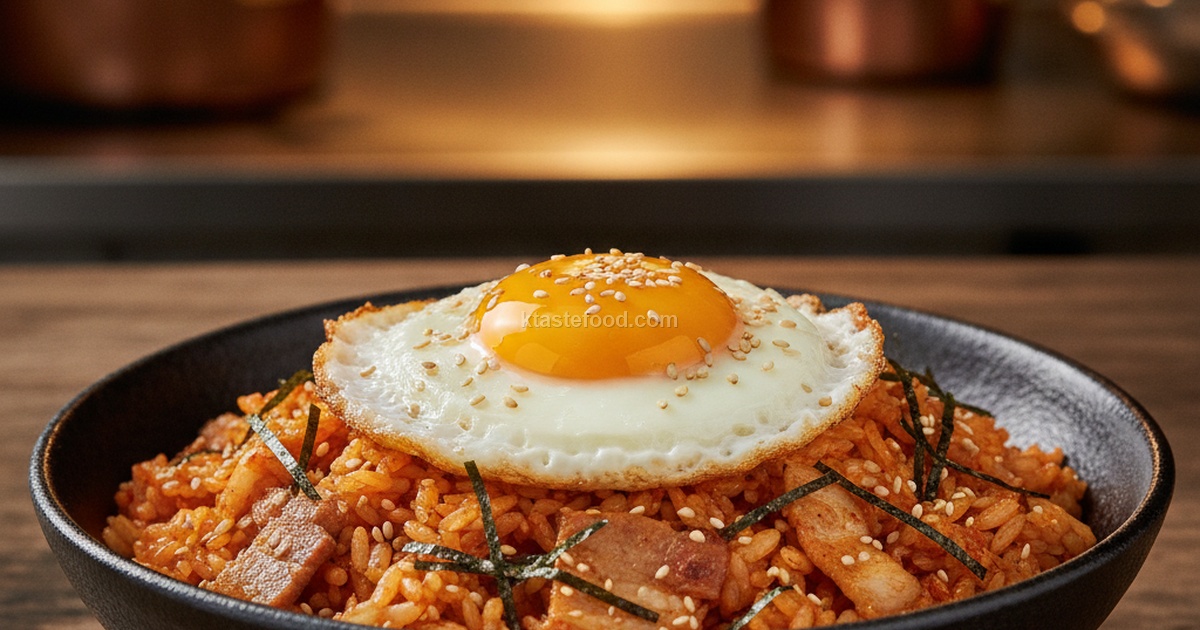
Seoul Street Golden Butter Kimchi Bokkeumbap: 15-Minute Restaurant-Style Kimchi Fried Rice with Crispy Spam & Golden Runny Egg
Rice · 20 min

Crispy Kimchi Jeon (Korean Kimchi Pancake)
Side Dishes · 30 min
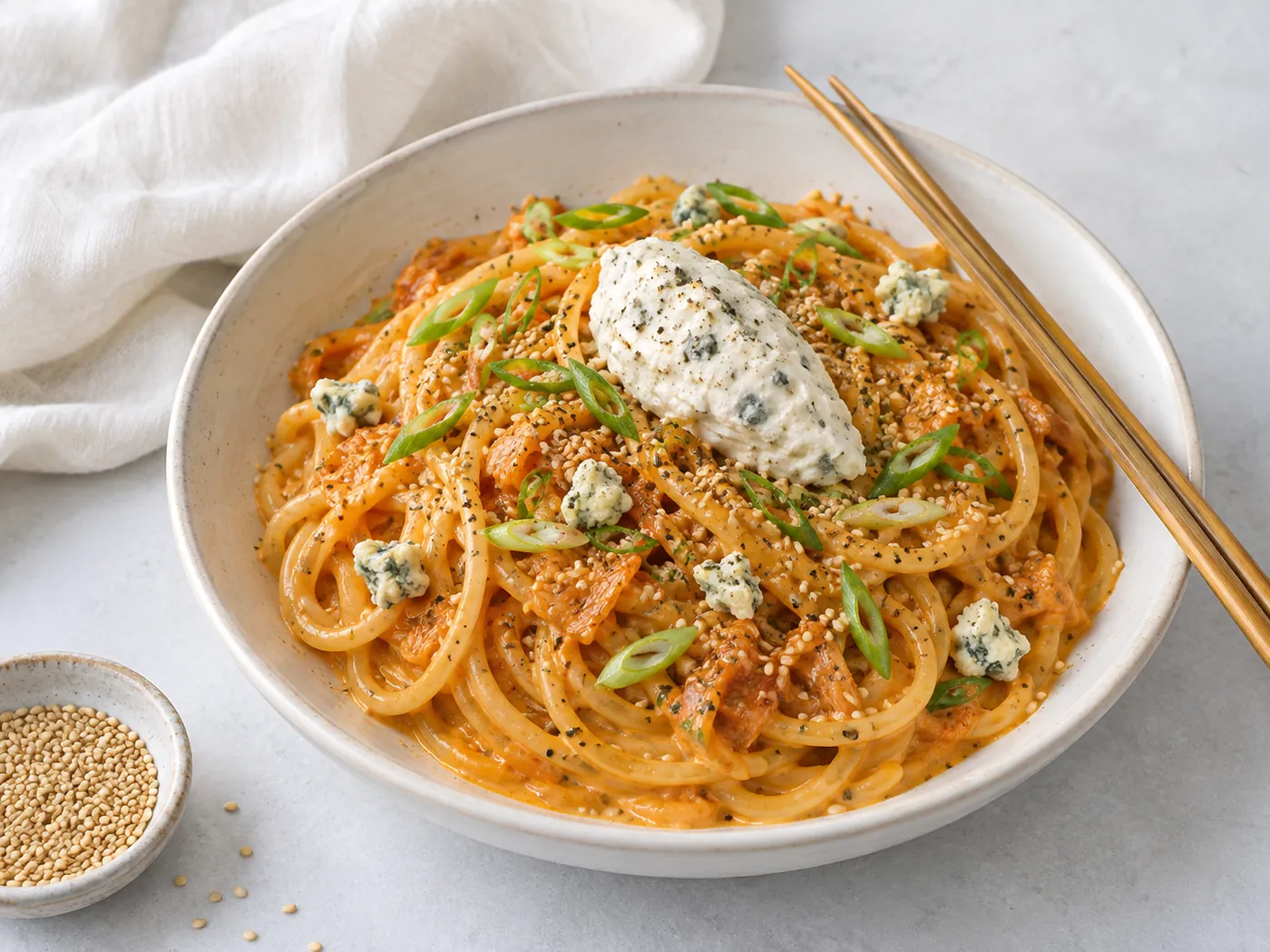
Creamy Kimchi Carbonara with Whipped Gorgonzola
Meat · 35 min
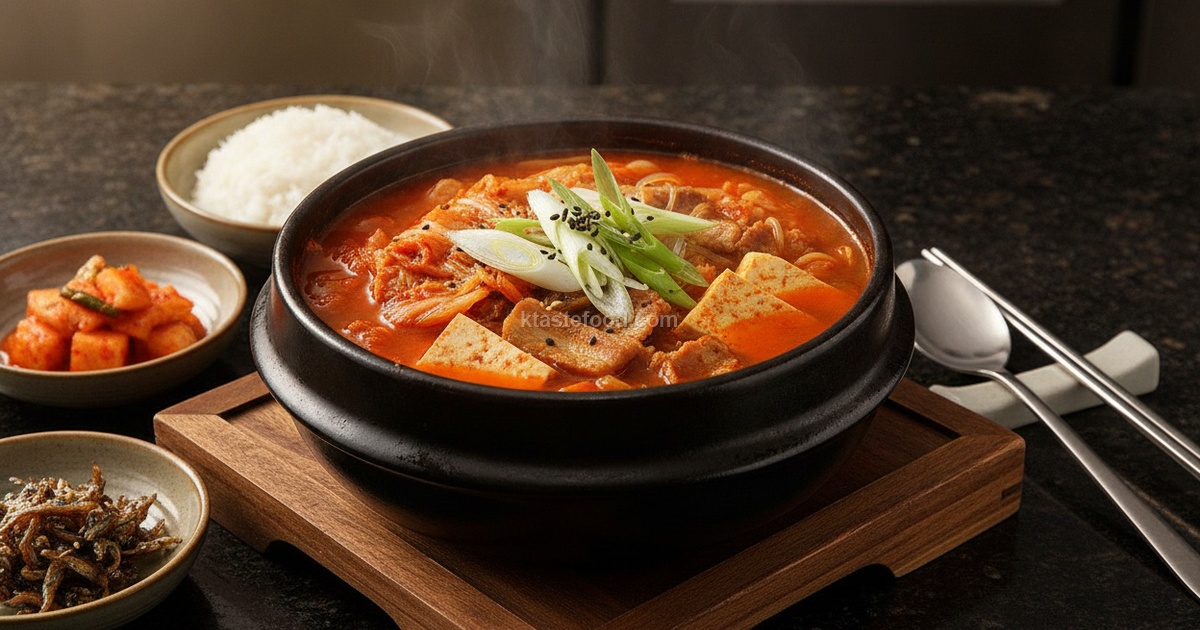
Daebak Mat-Jib Style Kimchi Jjigae: The Secret to Deeply Aged Tuna Stew
Soup & Stew · 1 min