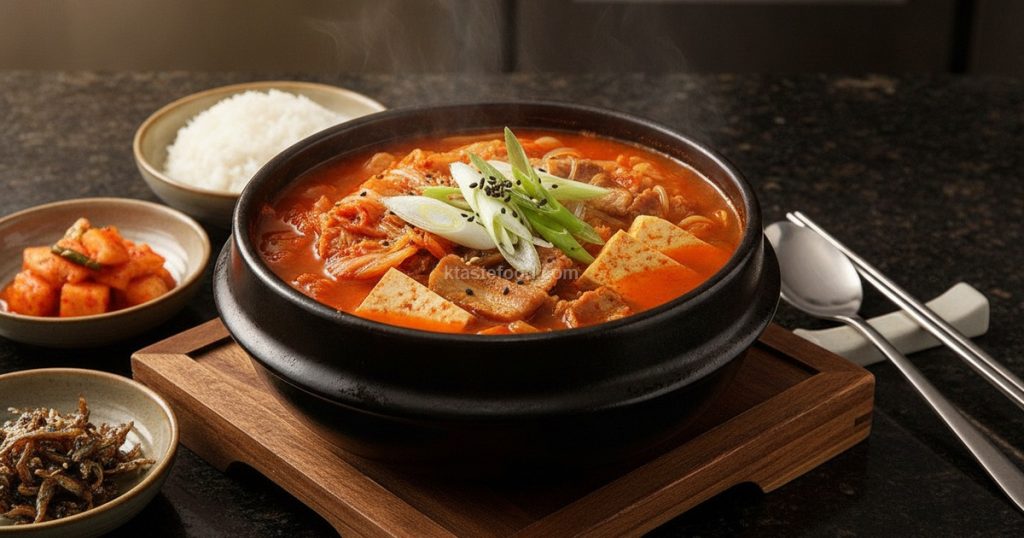
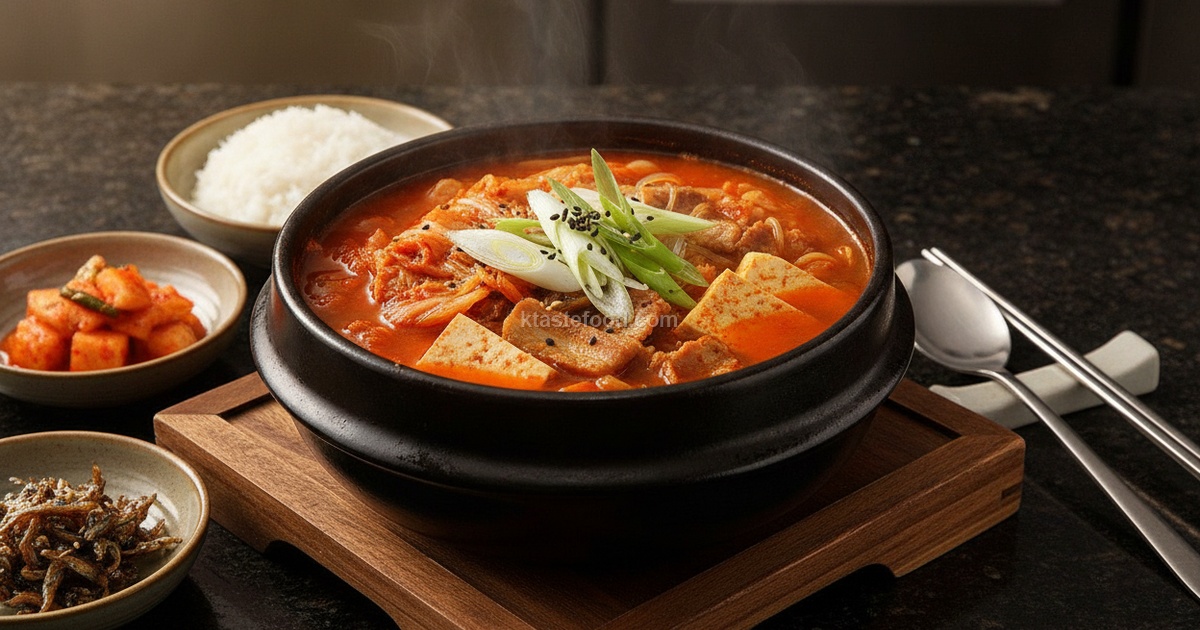
Craving the authentic, profound flavors of a truly great Korean kimchi stew? This ‘Daebak Mat-Jib’ (Awesome Restaurant) style Kimchi Jjigae recipe reveals the secret to an incredibly deep and satisfying taste: an aged, pre-sautéed kimchi base. Paired with hearty tuna, this stew is a comforting bowl of spicy, savory perfection that will transport your taste buds straight to Korea.
📋 Official Recipe Card: Daebak Mat-Jib Style Kimchi Jjigae: The Secret to Deeply Aged Tuna Stew
Experience the rich, umami depth of restaurant-quality Korean kimchi stew, crafted with a unique aged kimchi base and savory tuna, a true taste sensation.
⏱️ Prep Time: 15 minutes
🔥 Cook Time: 50 minutes
🍽️ Servings: 3-4 servings
⚡ Calories: 680 kcal
🥕 Ingredients
- 1/2 head (approx. 2.5-3 cups) well-fermented kimchi, roughly chopped (김치1/2포기)
- 1 tbsp grapeseed oil (포도씨유1큰술)
- 1/3 cup kkakdugi (radish kimchi) juice or regular kimchi juice (깍두기국물1/3컵)
- 1 tsp sugar (설탕)
- 1-2 tbsp Korean chili flakes (gochugaru), to taste (고춧가루)
- 1 tbsp minced garlic (다진 마늘1큰술)
- 4-5 cups anchovy broth or water (물(멸치육수))
- 1 can (5 oz / 140g) tuna in water or oil, drained (참치1캔)
- 1 block (14 oz / 400g) firm tofu, sliced into 1-inch cubes (두부)
- 1/2 cup chopped green onions, for garnish (대파)
👩🍳 Step-by-Step Instructions
Prepare Kimchi and Aromatics: Roughly chop your well-fermented kimchi into bite-sized pieces. Mince the garlic and prepare the green onions and tofu by slicing them as desired for the final stew. This initial prep ensures everything is ready for sequential cooking.
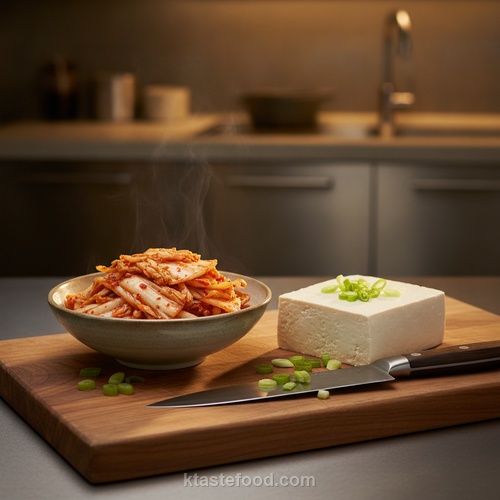
Sauté the Kimchi Foundation: Heat grapeseed oil in a medium pot or Dutch oven over medium heat. Add the chopped kimchi, kkakdugi juice (or regular kimchi juice), sugar, and Korean chili flakes. Sauté for about 5-7 minutes, stirring occasionally, allowing the kimchi to soften and develop its initial flavors.
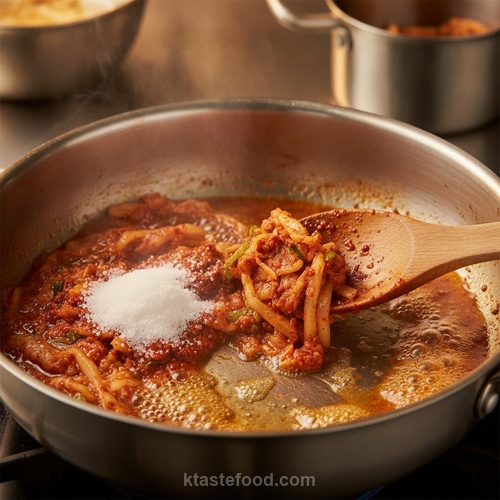
Infuse Garlic & Deepen Flavors: Add the minced garlic to the sautéing kimchi mixture. Continue to sauté for another 2-3 minutes until fragrant. Be careful not to burn the garlic; reduce heat if necessary. This step builds a foundational layer of savory aroma for the stew.
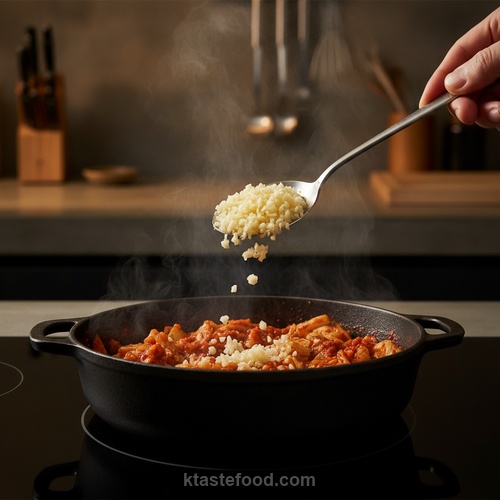
Deep-Simmer the Kimchi Base: Pour 1 cup of anchovy broth (or water) into the pot with the kimchi. Bring it to a gentle simmer, then cover the pot and reduce the heat to low. Let the kimchi deeply simmer for about 30 minutes, stirring occasionally. This long, slow simmer tenderizes the kimchi and extracts maximum flavor.
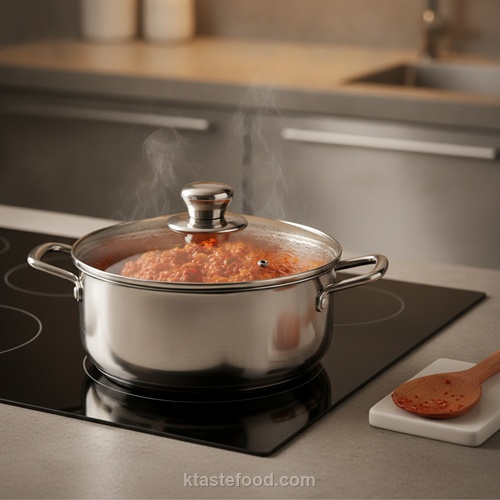
Cool & Age for Flavor Depth: Once the kimchi base is deeply simmered and tender, remove it from the heat and let it cool completely. Transfer the cooled, sautéed kimchi base into an airtight container and refrigerate for at least half a day (or ideally, overnight). This crucial aging step develops an unparalleled depth of flavor, making your stew truly ‘Daebak Mat-Jib’ quality.
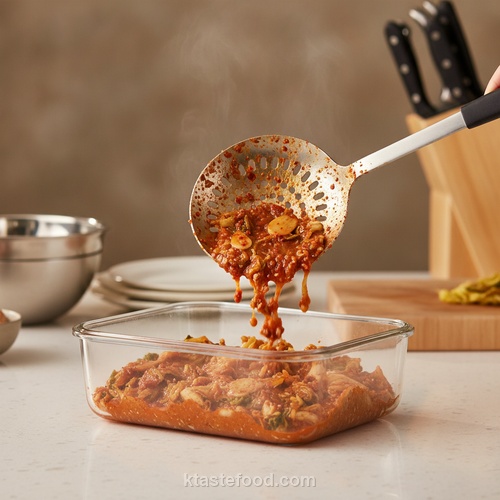
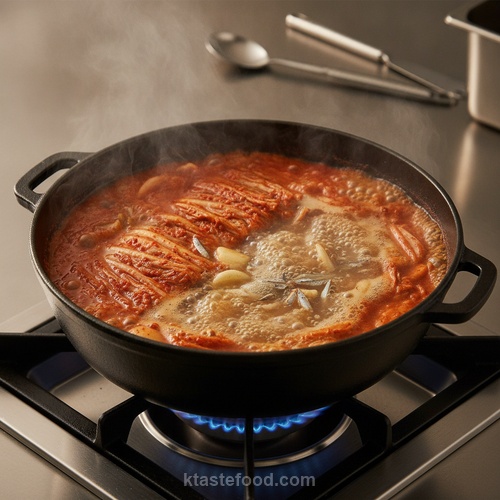
Assemble the Kimchi Jjigae: In a clean pot, add the aged kimchi base. Pour in the remaining 3-4 cups of anchovy broth (or water) until the liquid reaches about three-quarters of the pot’s capacity. Bring the stew to a rolling boil over medium-high heat, ensuring the flavors meld together.
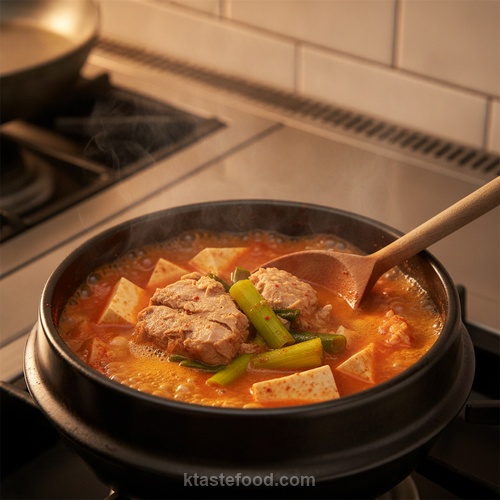
Add Protein, Fresh Elements & Serve: Once the stew is boiling, gently stir in the drained tuna. Add the sliced tofu and chopped green onions to the pot. Allow it to simmer for another 2-3 minutes, just until the tofu is heated through and the green onions are slightly softened. Turn off the heat and serve immediately with freshly steamed rice!
💡 Smart International Ingredient Substitutions
- Kkakdugi (radish kimchi) juice: Substitute with Regular kimchi juice or 1 tbsp apple juice + 1/2 tsp fish sauce (Kimchi juice adds tangy depth; if unavailable, a touch of apple juice for sweetness and fish sauce for umami can mimic some complexity.)
- Tuna: Substitute with Thinly sliced pork belly, Spam, or king oyster mushrooms (Pork belly adds richness, Spam a savory salty kick, while king oyster mushrooms offer a chewy, umami vegetarian alternative.)
- Grapeseed oil: Substitute with Any neutral cooking oil (canola, vegetable) (A neutral oil is preferred to avoid overpowering the kimchi’s distinct flavors.)
🍽️ Perfect Korean Food Pairings (What to Serve With This)
- Steamed White Rice: An absolute essential! The plain rice perfectly balances the spicy, savory, and tangy notes of the stew, making it a complete meal.
- Gyeran-jjim (Korean Steamed Eggs): The fluffy, mild, and often slightly sweet steamed eggs provide a soothing contrast to the bold, spicy flavors of the Kimchi Jjigae.
- Gim (Roasted Seaweed Snacks): Crispy, savory roasted seaweed adds a delightful texture and a subtle salty-umami flavor that complements the stew beautifully.
❓ Frequently Asked Questions (FAQ)
Q: What’s the best type of kimchi to use for Kimchi Jjigae?
For an authentic, deeply flavored Kimchi Jjigae, it’s best to use well-fermented, sour kimchi. Fresh kimchi lacks the complex tangy notes that develop during fermentation and are crucial for the stew’s character. If your kimchi isn’t sour enough, adding a bit of kimchi juice or vinegar can help.
Q: Can I make this Kimchi Jjigae vegetarian or vegan?
Absolutely! For a vegetarian version, omit the tuna and use a rich vegetable broth instead of anchovy broth. You can add extra firm tofu, king oyster mushrooms, or even a handful of enoki mushrooms for texture and umami. Ensure your kimchi is vegan (some use fish sauce).
Q: How do I store and reheat leftover Kimchi Jjigae?
Store any leftover Kimchi Jjigae in an airtight container in the refrigerator for up to 3-4 days. To reheat, transfer it to a small pot and warm gently over medium heat, adding a splash of water or broth if it has thickened too much. The flavors often deepen even more the next day!
Q: Is the aging step (Step 5) truly necessary for the taste?
While you can technically skip the aging step and proceed to boil the stew immediately, the ‘Daebak Mat-Jib’ secret lies in this crucial step. Aging the pre-sautéed kimchi allows the flavors to meld and deepen significantly, resulting in a much more complex, profound, and restaurant-quality taste that sets this recipe apart.
Chef Park’s Kitchen Advice: A Note from Park’s Kitchen: The aging of the pre-sautéed kimchi base (Step 5) is the true game-changer for this recipe. It’s what transforms a good kimchi jjigae into a ‘Daebak Mat-Jib’ experience, developing layers of umami and tang that are simply irresistible. While the recipe uses tuna, feel free to substitute with thinly sliced pork belly or even Spam for different classic variations.
Join the K-Taste VIP Food Club
Sign in with Google to save your favorite recipes, create custom meal plans, and get weekly Korean chef secrets delivered to your inbox!