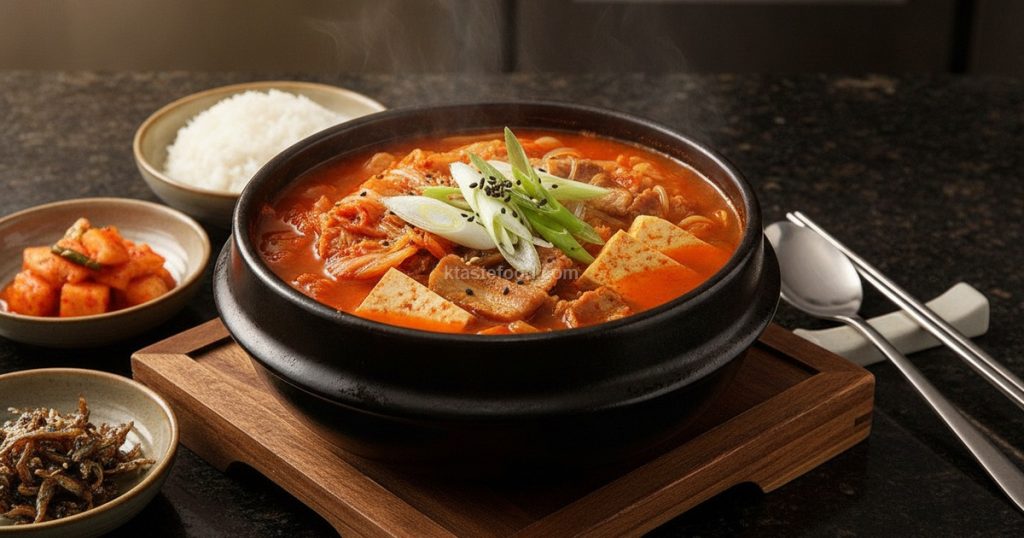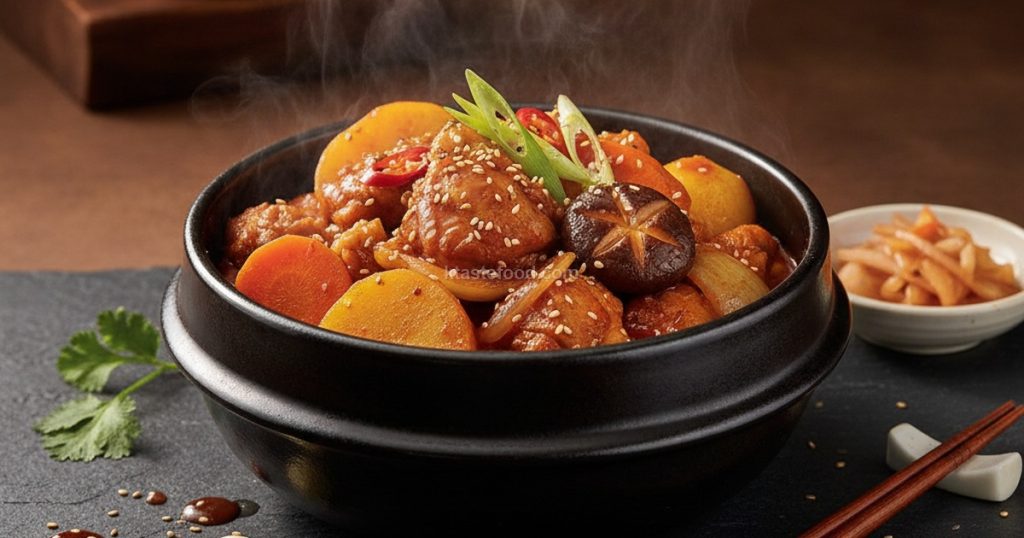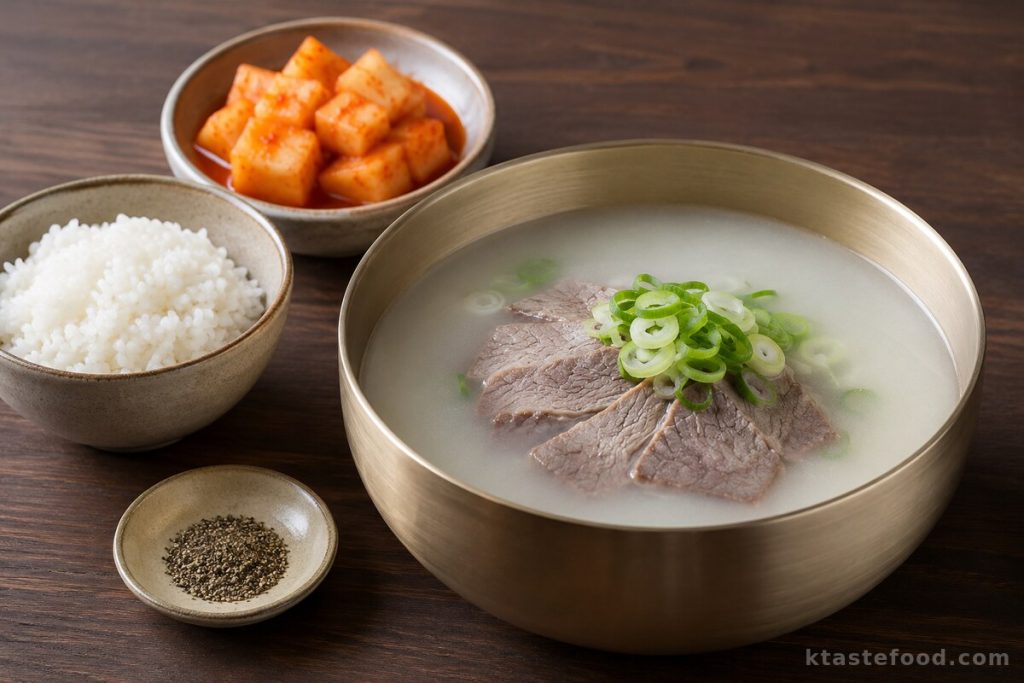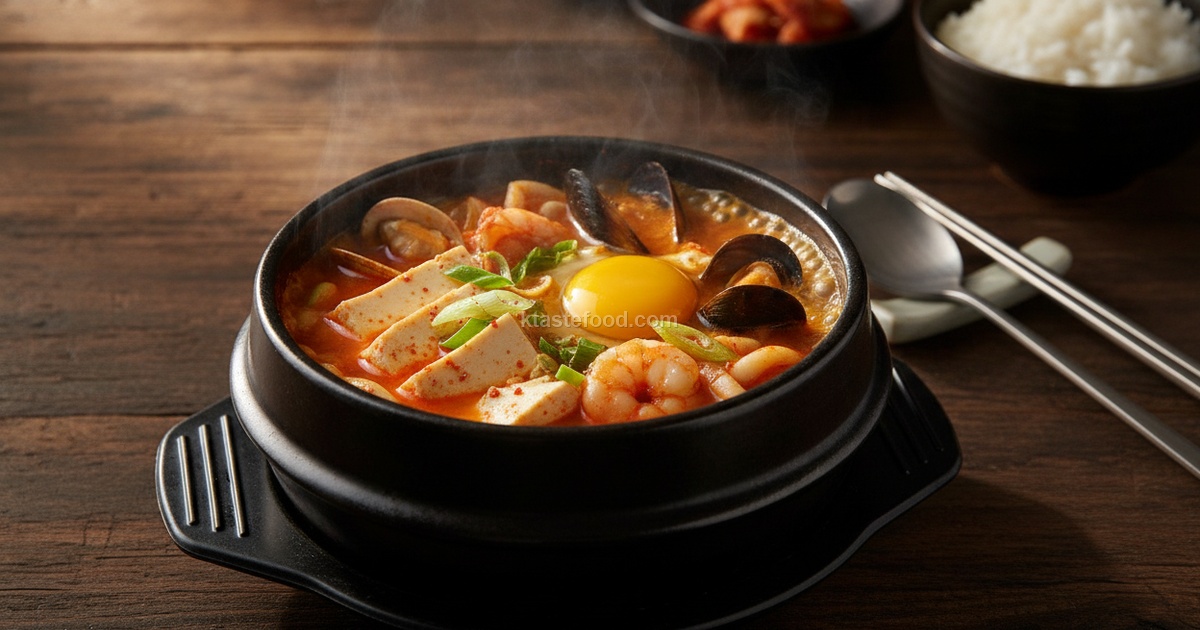
There’s a special kind of warmth that only a steaming bowl of Sundubu Jjigae can bring to a Korean family kitchen. It’s a dish that embodies comfort, spice, and the deep, soulful flavors of home. My dearest Sister always says that the secret to a truly unforgettable Spicy Seafood Soft Tofu Stew lies in balancing the fiery kick with an oceanic depth of flavor. This recipe, passed down through generations, promises to deliver that restaurant-quality experience right to your table, with every silky spoonful of tofu and every succulent piece of seafood lovingly simmered in a rich, vibrant broth. It’s more than just a meal; it’s a hug in a bowl, a testament to the enduring power of Korean home cooking.
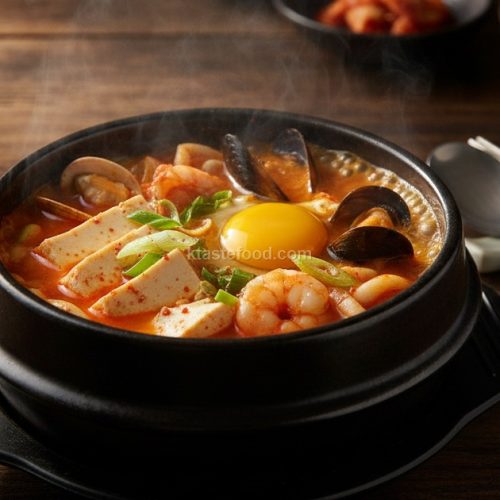
The Ultimate Spicy Seafood Soft Tofu Stew: Master Restaurant-Quality Sundubu Jjigae at Home
⚡ Nutrition: 520 kcal (per 1 serving / 1인분 기준)
🍳 Required Equipment: Heavy 24cm Cast-Iron Pot, Acacia Wood Cutting Board, Santoku Chef Knife, Wooden Spatula, Soup Ladle, Ttukbaegi (Korean Earthenware Bowls, optional)
🌱 Dietary & Lifestyle Tags: Dairy-Free, High-Protein, Seafood-Rich, Spicy
Equipment
- Heavy 24cm Cast-Iron Pot
- Acacia Wood Cutting Board
- Santoku Chef Knife
- Wooden Spatula
- Soup Ladle
- Ttukbaegi (Korean Earthenware Bowls, optional)
Ingredients
Ingredients
- 700 g (24.7 oz) Soft Tofu (Sundubu) 2 tubes/packs, usually 350g each
- 150 g (5.3 oz) Fresh Clams about 1 cup, cleaned and de-sandied
- 150 g (5.3 oz) Fresh Oysters about 1 cup, shucked
- 150 g (5.3 oz) Seafood Mix about 1 cup, frozen or fresh (shrimp, squid, mussels)
- 1 medium Onion thinly sliced
- 30 g (1 oz) Green Onions (Scallions) about 1/2 cup, finely chopped
- 11 g (0.4 oz) Chicken Stock Powder 3/4 tablespoon, or 1/2 cup liquid chicken broth
- 30 g (1 oz) Minced Garlic 2 tablespoons, divided
- 45 ml (1.5 fl oz) Sesame Oil 3 tablespoons
- 24 g (0.85 oz) Korean Chili Flakes (Gochugaru) 3 tablespoons
- 15 ml (0.5 fl oz) Fish Sauce (액젓) 1 tablespoon, anchovy or sand lance
- to taste N/A Salt fine sea salt
- 1-2 large Eggs for serving
- 960 ml (4 cups) Water or vegetable/anchovy broth
Instructions
Instructions
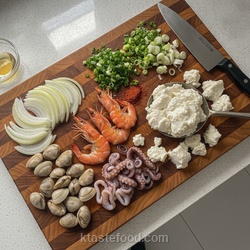
- Prepare Ingredients: On your designated Natural end-grain acacia wood cutting board, thinly slice the medium onion and finely chop the green onions. Ensure all seafood (clams, oysters, seafood mix) is cleaned and ready. Have your soft tofu packages, chicken stock powder, gochugaru, sesame oil, fish sauce, and eggs at hand.
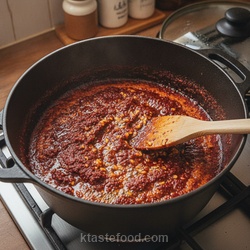
- Create the Spicy Chili Oil Base: Place your Heavy Matte-Black 24cm Cast-Iron Dutch Oven over medium-high heat. Add 3 tablespoons of sesame oil, then stir in 3 tablespoons of Korean chili flakes (gochugaru) and 1 tablespoon of minced garlic. Sauté constantly for 1-2 minutes until a fragrant, reddish chili oil forms, being careful not to burn the chili flakes.
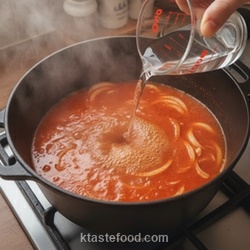
- Build the Umami Broth: Pour 4 cups of water into the pot with the chili oil base. Add the thinly sliced onion and 3/4 tablespoon of chicken stock powder. Bring the broth to a rolling boil over high heat, allowing the flavors to meld and the onion to soften slightly.
- Add the Fresh Seafood & Initial Seasoning: Once the broth is boiling, add all the fresh clams, oysters, and seafood mix to the pot. Stir in 1 tablespoon of fish sauce (e.g., anchovy or sand lance) and the remaining 1 tablespoon of minced garlic. Continue to boil vigorously.
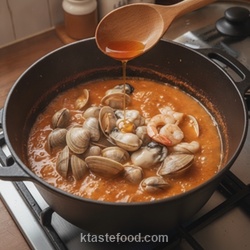
- Incorporate Silken Tofu & Green Onions: As the seafood cooks and the broth reaches a full boil again, gently add the soft tofu directly into the pot. Use a spoon to break the tofu into large, irregular chunks (2-3 times) rather than fully mashing it. Stir in the finely chopped green onions.
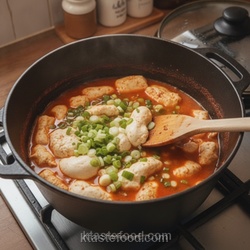
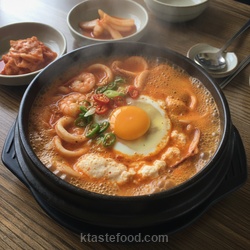
- Final Seasoning & Egg DropTaste the stew and adjust the seasoning with salt to your preference. Crack 1–2 eggs directly into the main pot—or drop one egg into each individual ttukbaegi (Korean earthenware bowl) if serving separately. Let the eggs cook briefly until the whites are just set while keeping the yolks delightfully runny, taking care not to stir too much.Serve ImmediatelyLadle the piping hot, spicy seafood soft tofu stew into serving bowls or individual ttukbaegi. Serve immediately alongside a warm bowl of rice and your favorite Korean side dishes to enjoy its deep, comforting, and invigorating flavors!
Notes
Join K-Taste Food
Sign in with Google to explore exclusive Korean recipes and get instant updates.
💡 Smart International Ingredient Substitutions
- Fresh Clams & Oysters: Substitute with Shrimp or Frozen Seafood Mix (For convenience, a good quality frozen seafood mix or fresh shrimp can be used. Adjust cooking time as needed.)
- Chicken Stock Powder: Substitute with Anchovy-Kelp Broth or Vegetable Broth (For an authentic Korean base, use homemade anchovy-kelp broth. Vegetarian option: use vegetable broth.)
- Korean Chili Flakes (Gochugaru): Substitute with Regular Chili Flakes + Paprika (If gochugaru is unavailable, use a blend of regular red chili flakes for heat and sweet paprika for color and mild flavor.)
🍽️ Perfect Korean Food Pairings (What to Serve With This)
- Master Fluffy Korean Pot Rice (Naembi Bap) Easily: No Rice Cooker Needed, Just Perfect Grains: The comforting, plain rice perfectly complements the fiery and flavorful Sundubu Jjigae, providing a balanced base for the stew’s rich broth.
- The Secret to Silky, Jiggly Korean Steamed Eggs (Gyeran Jjim): Achieve Pudgy Perfection: The mild, fluffy texture of Gyeran Jjim offers a delightful contrast to the spicy stew, soothing the palate and adding a delicate creaminess to the meal.
- Mastering Authentic Baechu Kimchi: Sister’s Secret to Perfectly Fermented Napa Cabbage: No Korean meal is complete without kimchi! The tangy, fermented flavors of authentic Baechu Kimchi cut through the richness of the stew, enhancing the overall dining experience.
❓ Frequently Asked Questions (FAQ)
Q: How can I adjust the spiciness of Sundubu Jjigae?
To make it less spicy, reduce the amount of gochugaru (Korean chili flakes) in Step 2. For more heat, you can add an extra tablespoon of gochugaru or a fresh green chili pepper during Step 4.
Q: Can I make this recipe vegetarian or vegan?
Yes! Omit all seafood and eggs. Replace chicken stock powder with vegetable broth or a homemade kelp-mushroom broth. You can add more vegetables like mushrooms (enoki, shiitake) or zucchini for extra texture and flavor.
Q: What’s the best way to serve Sundubu Jjigae?
Sundubu Jjigae is traditionally served bubbling hot in individual ttukbaegi (Korean earthenware bowls) with a bowl of steamed white rice and various banchan (side dishes) like kimchi, seasoned bean sprouts, or stir-fried fish cakes.
Q: What kind of soft tofu (sundubu) should I use?
Look for ‘soft tofu’ or ‘silken tofu’ that comes in a tube or pouch, often labeled ‘순두부’ (sundubu). This type of tofu is uncooked, extremely delicate, and has a custardy texture perfect for stews. Avoid firm or medium-firm block tofu.
Sister’s Secret Touch: Sister’s Secret Touch: Achieving that authentic, restaurant-quality Sundubu Jjigae involves a few key insights. Firstly, while using just a seafood mix is fine, my Sister always emphasizes that adding fresh clams and oysters significantly deepens and brightens the stew’s natural oceanic sweetness, giving it a ‘refreshing’ (시원하다) depth. Secondly, don’t underestimate the power of chicken stock; it’s the unsung hero that brings a familiar savory richness, that ‘special something’ you find in the best Korean stew houses, enhancing the umami without overpowering the seafood. Finally, when making the chili oil base in Step 2, maintain a medium-high heat and keep stirring; this gently toasts the gochugaru and garlic, releasing their full aromatic potential without burning, which is crucial for a vibrant and flavorful broth.
🏷️ Recipe Keywords & Dietary Tags:
Join the K-Taste VIP Food Club
Sign in with Google to save your favorite recipes, create custom meal plans, and get weekly Korean chef secrets delivered to your inbox!