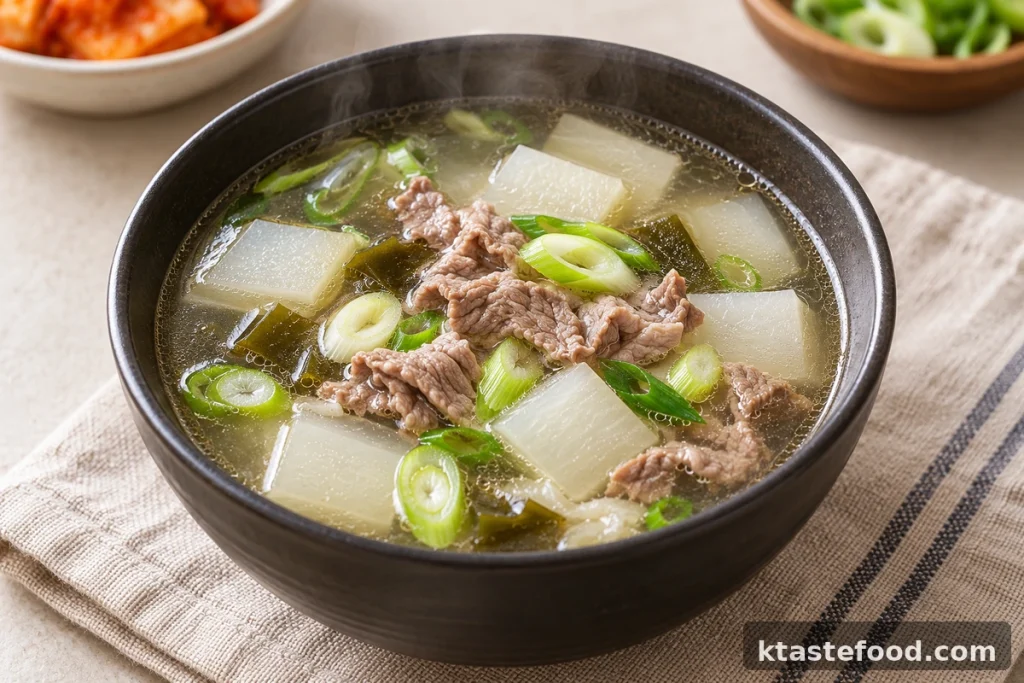
A clear, comforting Korean beef and radish soup with a delicate savory finish.
Why This Korean Beef Radish Soup Works
The radish softens directly in the broth, the beef adds depth, and kelp builds a light savory base. Just 1 teaspoon of tuna extract rounds out the flavor without making the soup taste fishy.
Korean Beef Radish Soup (Sogogi Muguk) – Clear Korean Comfort Soup
Sogogi Muguk (소고기뭇국) is a Korean home-style soup made with beef and radish. This clear-broth method gently cooks radish with dried kelp before adding beef. Skimming the surface keeps the broth clean, while soup soy sauce, garlic, a little tuna extract, and green onion finish the soup. Serve hot with steamed rice.
Allergens
Contains soy (soup soy sauce) and fish (tuna extract). The optional oyster or mussel variation also contains shellfish. Check packaged ingredient labels for wheat and other allergens.
Ingredients (Metric & US)
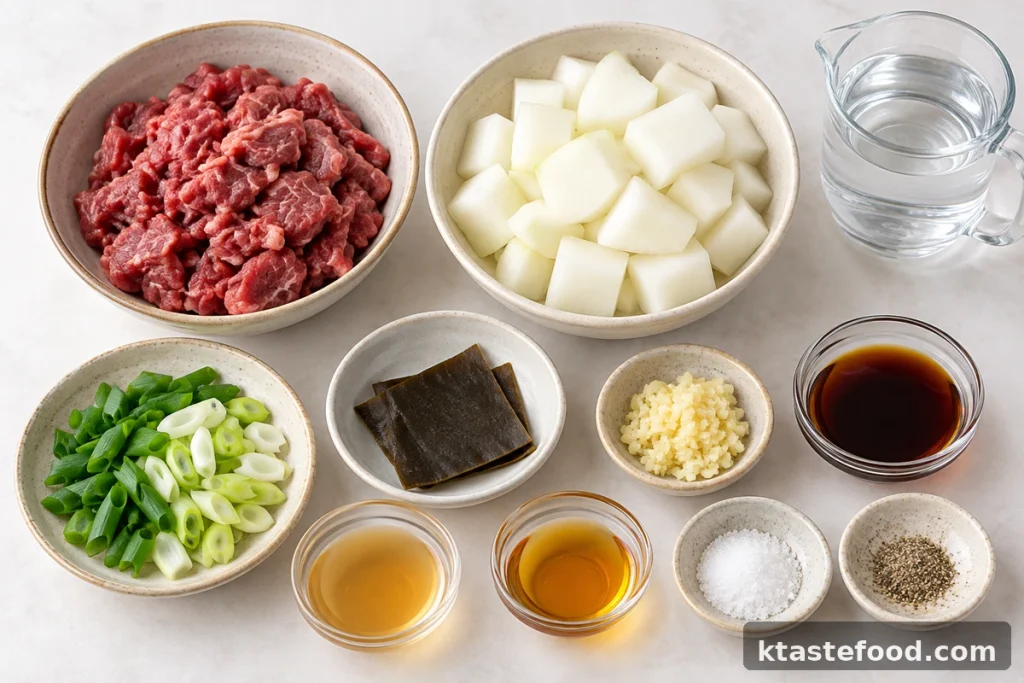
Soup
Seasonings
Finish
Step-by-Step Instructions
Prepare the beef, peeled radish cubes, and green onion. Measure the kelp and seasonings before heating the pot.
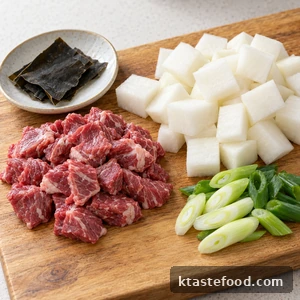
Put the cubed radish, dried kelp and 1.5 L water in a pot. Bring to a boil and reduce to a gentle simmer; cook about 10 minutes, until the radish starts to soften.
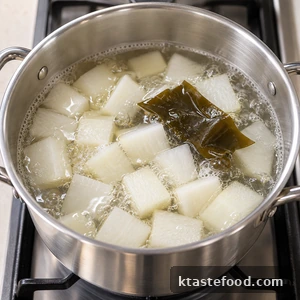
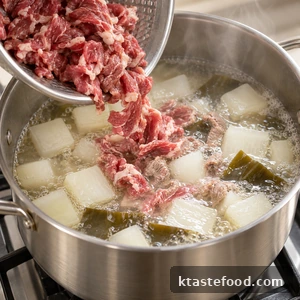
Add the beef to the simmering radish broth and cook until the beef changes color. Keep the heat at a steady simmer.
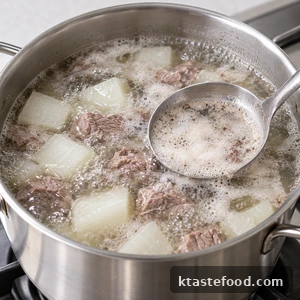
Skim off foam and impurities that rise to the surface. Simmer until the beef cooks through and the broth tastes savory, approximately 10 additional minutes.
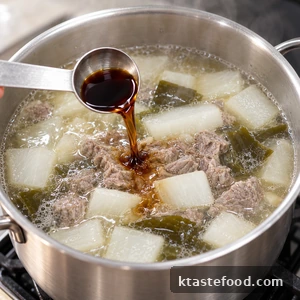
Stir in 2 tablespoons soup soy sauce. Taste and adjust gradually rather than darkening the broth with too much soy sauce.
Add 1 teaspoon (5 mL) tuna extract and the minced garlic. Simmer gently for 3 to 5 minutes to blend the flavors; tuna extract should add subtle umami, not a fishy taste.
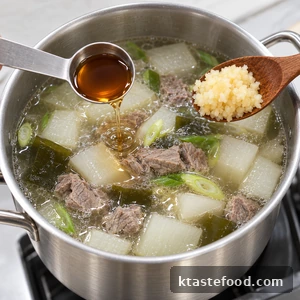
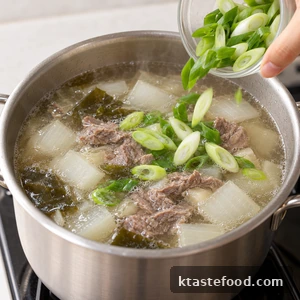
Add the sliced green onion and cook another 1–2 minutes. Remove the kelp if desired, season with salt and pepper only as needed, and serve hot with steamed rice.
Notes
Winter Seafood Variation
When oysters are in season, add a small handful of cleaned oysters during the final minutes of simmering and cook until fully cooked. They give the clear beef broth a sweet, briny depth. Cleaned mussels are another delicious option; simmer until the shells open and the meat is fully cooked, and discard any mussels that stay closed. Taste the soup before adding salt because shellfish bring their own salinity.
Make It with Korean Yam or Taro
You can replace some or all of the radish with Korean yam (ma) or taro (toran) for a different Korean-style beef soup. Korean yam adds a delicate, silky texture and mellow sweetness; add it later in cooking so it keeps its shape. Taro gives the broth a soft, creamy, slightly earthy character; peel carefully and cook it thoroughly until tender. These variations change the soup's texture and flavor rather than copying the classic radish version.
Chef's Secret Touch
Use only 1 tsp (5 mL) tuna extract as a gentle umami accent. Keep the soup at a soft simmer, skim the foam, and adjust the final salt after all savory ingredients are added.
Winter Seafood Variation
- In winter, fresh oysters or mussels bring a pleasantly briny, ocean-like umami to beef radish soup. Add cleaned oysters near the end and cook thoroughly; for mussels, cook until shells open and discard any that remain closed. Taste before adding salt.
Korean Yam (Ma) or Taro (Toran)
- Replace some or all of the radish with Korean yam for a silky, mellow texture, or taro for a creamy, slightly earthy soup. Add yam later so the pieces hold their shape. Peel and cook taro thoroughly until tender. Each gives the familiar beef broth a new character.
Chef's Secret Touch
- Use only 1 tsp (5 mL) tuna extract to round out the beef's savory flavor. Keep the broth at a gentle simmer, skim foam, and add extra salt only after tasting.
🛒 Chef Park’s Recommended Ingredients & Tools
Amazon Affiliate Disclosure: As an Amazon Associate, K-Taste Food earns from qualifying purchases at no additional cost to you.
One-step join
Join K-Taste Food
Use your Google account to join K-Taste Food and explore Korean recipes.
Continue with GoogleSecure sign-in by Google. No separate password needed. Privacy Policy