#salt
Introduction: The White Gold of Civilization
Introduction: The White Gold of Civilization
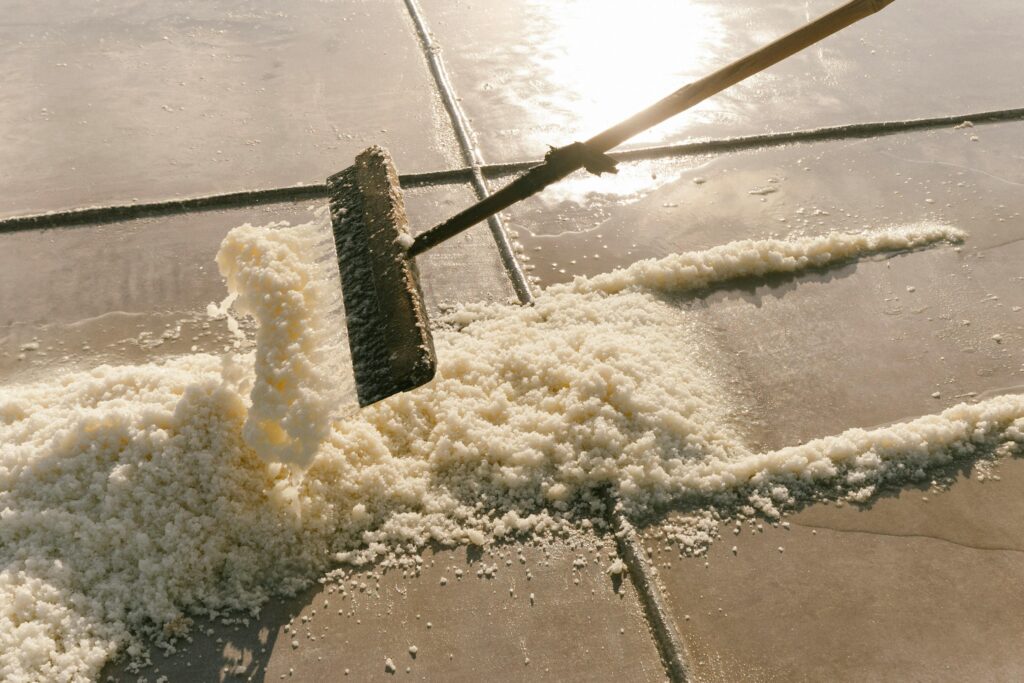
The history of humanity has been a relentless journey to find the ‘White Gold’ from the vast earth and sea. Just as the Roman Empire paid its soldiers with salt (salarium), giving birth to the word ‘Salary,’ salt was a strategic asset symbolizing wealth and power. This ‘Preservation Revolution’ saved food from decay, allowed humanity to flourish, and spread culture across the globe through the legendary ‘Salt Road.’ To a chef like me, who has spent 30 years in the kitchen, salt is not merely a seasoning but the brilliant beginning of the culinary world.
Essence of Salt

The Essence of Life: A 0.9% Masterpiece
Biologically, salt (sodium) is an absolute ‘Core of Life.’ Our blood and cellular fluids maintain a salinity of exactly 0.9%, mirroring the primordial sea. The constant beating of our hearts and the electrical signals of our brains are only possible because salt acts as a conductor. For a chef, picking up a pinch of salt is a sacred ritual—fueling the most noble activities of life.
Global Salt Exhibition: An Artistic Tour
The earth and sea have crafted unique salt masterpieces, each reflecting the distinct terroir of its origin.
France – Le Guérande: The ‘Fleur de Sel’ from the Atlantic coast is a noble flower of salt, harvested by hand using ancient Celtic methods. Its delicate moisture and subtle sweetness make it the ultimate ‘finishing salt’ that elevates a dish’s prestige without overpowering it.
England – Maldon Sea Salt: Since 1882, this salt from the Essex coast has been world-renowned for its unique pyramid-shaped crystals. Its clean, brisk crunch provides a structural texture that makes it a favorite among professional chefs for seasoned meats and gourmet chocolates.
Peru – Maras Andean Spring Salt: Located 3,000 meters above sea level, these ancient salt pans fed by a subterranean salty stream produce a pale pink salt. It carries the mineral essence of the Andes, offering a robust and earthy flavor profile that speaks of ancient Incan history.
Japan – Moshio (Seaweed Salt): This ancient Japanese salt is made by evaporating seawater with seaweed (Hondawara). The result is a beige-colored salt infused with natural Umami, providing a savory depth that bridges the gap between mineral salt and organic seasoning.
Djibouti, Africa – Lake Assal Salt: From the lowest point in Africa, these naturally formed spherical salt pearls are shaped by the intense waves of a hypersaline lake. They represent the raw, wild energy of the African sun and water, offering a sharp and concentrated saltiness.
Korea – Solar Salt from the West Coast: This is the undisputed pinnacle of the exhibition. As one of the world’s top five tidal flats, the Korean West Coast produces a solar salt with overwhelmingly high mineral content (Magnesium, Potassium, Calcium). Unlike purely salty refined salts, it possesses a unique ‘bittersweet’ complexity. When aged to remove bitterness (Gansoo), it becomes the essential engine for fermentation, allowing Korean Jang and Kimchi to develop a profound depth of flavor that no other salt in the world can replicate.
Climax:
An
Artistic
Tour
of
Global
Salts

Crafted by Nature
Conclusion: The Silent Conductor of Potential
After 30 years of feeling salt between my fingertips, I have realized a true culinary philosophy: a great salt does not dominate the palate but acts as a ‘Silent Conductor’ that awakens the hidden potential of every ingredient. From the delicate touch of France to the profound depth of Korea, salt is the smallest yet most powerful presence leading the grand orchestra of cuisine. In the end, a grain of salt is not a period marking the end of a dish, but a new creative beginning that awakens the soul of the ingredients for the guest.
#FoodHistory #CulinaryArts #Gourmet #FineDining #FoodScience


![[The Umami Odyssey: Part 1] The Language of Survival: Why We Crave Umami](https://ktastefood.com/wp-content/uploads/2026/04/stocksnap-ice-cream-2588541_1920-1-1024x682.jpg)