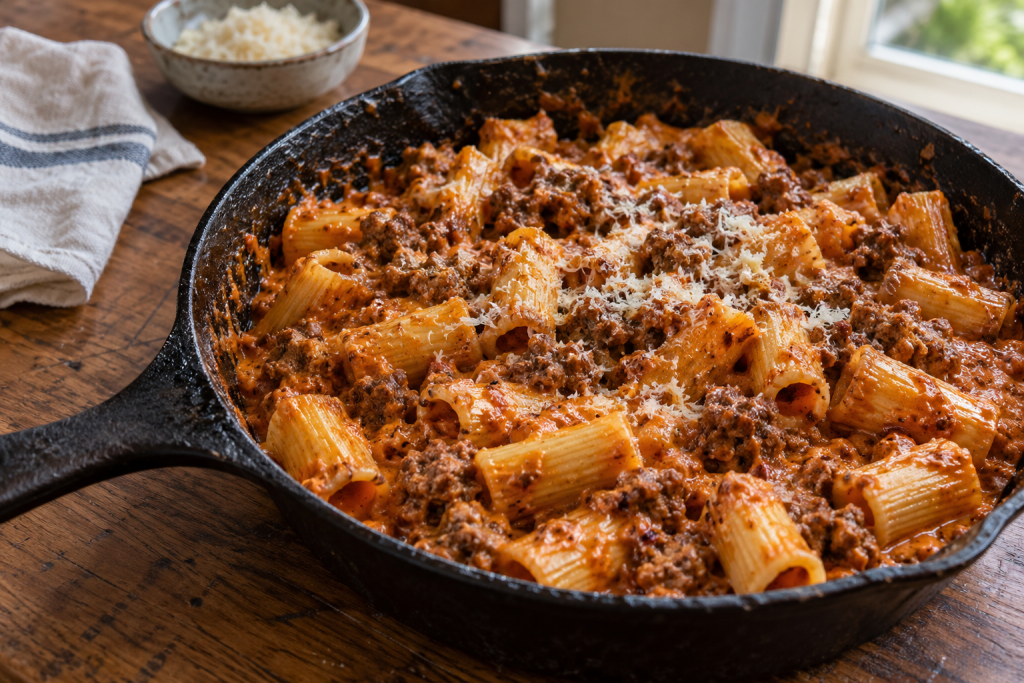
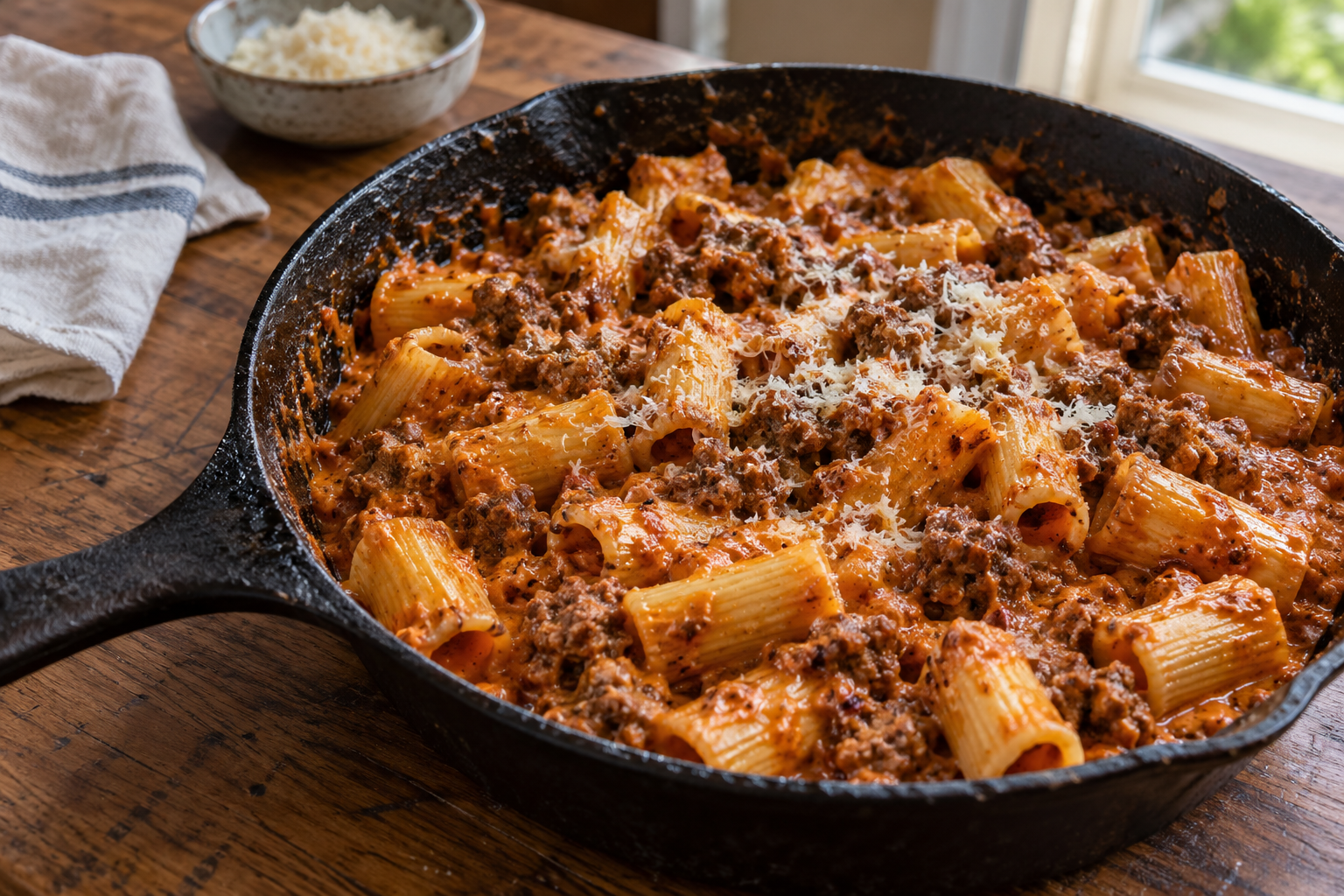
Treat this as a beef ragù before you think of it as cream pasta. Brown the beef until the pan develops a dark fond, soften the onion in those drippings, and use pasta water to pull the toasted gochujang from the skillet. Milk, cream, and cheese go in only after that savory base tastes complete, so the finished sauce is rich without losing the beef or fermented chile flavor.
Build the Ragù Before Adding the Dairy
The beef and gochujang need enough heat to brown and concentrate; milk and cream do not. Finish the ragù first, then lower the flame before adding room-temperature dairy. This order keeps the sauce smooth and lets the roasted beef flavor stay in front of the cream.
Creamy Gochujang Beef Ragù Pasta (No Roux)
Rigatoni in a no-roux gochujang beef ragù, finished with milk, cream, Parmesan, and mild melting cheese. Allergens: wheat, milk, and soy.
Keep raw beef chilled, prevent cross-contamination, cook it completely, keep dairy below a boil, and refrigerate leftovers within 2 hours.
🛒 Ingredients (Dual Measurements)
- 200 g (7 oz) rigatoni or other short ridged pasta
- 180 g (6.3 oz) ground beef, 90% lean
- 80 g (2.8 oz / about 1/2 medium) yellow onion, finely chopped
- 10 g (0.35 oz / 2 cloves) garlic, minced
- 10 g (0.35 oz / about 2 tsp) unsalted butter
- 20 g (0.7 oz / about 1 tbsp) gochujang
- 120 ml (1/2 cup) reserved pasta cooking water, plus more as needed
- 150 ml (2/3 cup) whole milk, at room temperature
- 80 ml (1/3 cup) heavy cream, at room temperature
- 30 g (1.1 oz / about 1/3 cup) finely grated Parmesan
- 30 g (1.1 oz / about 1/4 cup) grated mild cheddar or low-moisture mozzarella
- 1 g (about 1/4 tsp) ground black pepper
- Fine salt, only as needed after tasting
Step-by-Step Instructions
- Step 1: Boil the pasta and save the water: Bring well-salted water to a boil and cook the rigatoni until 2 minutes shy of al dente. Scoop out at least 240 ml (1 cup) pasta water before draining; start the sauce with 120 ml and keep the rest nearby.
- Step 2: Brown the beef: Set a wide cast-iron skillet over medium-high heat. Spread in the beef and leave it alone for about 1 minute before breaking it into small, irregular pieces. Cook until the edges are brown rather than gray, then transfer the beef to a plate and leave the fond in the pan.
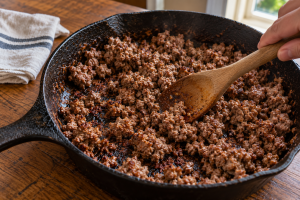
- Step 3: Soften the onion and garlic: Lower the heat to medium. Add the onion and cook for 4–5 minutes, scraping up any loose browned bits. Add the butter and garlic and stir for about 30 seconds, just until the garlic smells fragrant.
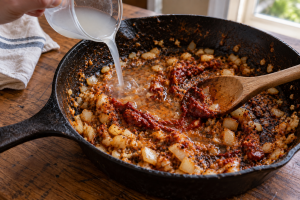
- Step 4: Toast and deglaze the gochujang: Stir the gochujang through the onion for 20–30 seconds. Pour in 120 ml reserved pasta water; it will bubble hard at first. Scrape the bottom of the skillet until the fond dissolves and the liquid turns a deep brick red.
- Step 5: Reduce the beef ragù: Return the beef and black pepper to the skillet. Keep it at a gentle simmer for 8–10 minutes, stirring now and then. It is ready for the dairy when the sauce gathers around the beef but a spoon dragged through the pan still leaves a little liquid behind.
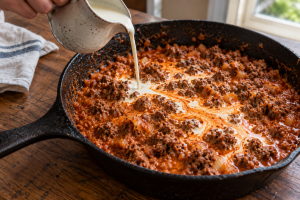
- Step 6: Add the milk and cream on low heat: Turn the heat to low and stir in the room-temperature milk and cream. Do not let the sauce boil. Cook for 3–4 minutes, until the color softens to orange and the sauce lightly coats the back of a spoon.
- Step 7: Finish the pasta in the skillet: Add the drained rigatoni and toss over low heat for 1–2 minutes. If the sauce looks tight, add the reserved pasta water 1 tablespoon at a time. It should slide around the pasta and settle into the ridges.
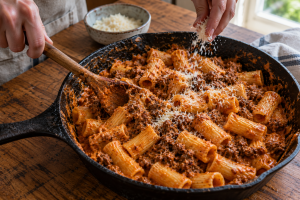
- Step 8: Melt in the cheese off the heat: Take the skillet off the burner. Add the Parmesan and cheddar or mozzarella in two batches, tossing until smooth after each. Taste before adding salt; both gochujang and cheese bring plenty. Rest for 2 minutes, loosen with pasta water if needed, and serve.
Join K-Taste Food
Sign in with Google to explore exclusive Korean recipes, create custom meal plans, and get instant updates.
💡 A Few Useful Swaps
- Rigatoni: Penne or shells are good substitutes because their grooves and hollows catch the beef sauce.
- Whole milk: Use 2% milk and add 1 extra tablespoon cream if the sauce tastes thin.
- Cheddar or mozzarella: Leave it out and add 10 g more Parmesan for a sharper, less stretchy finish.
🍽️ What Goes Well With It
- Smacked cucumber salad gives the creamy pasta a cool, crisp contrast.
- Korean spinach salad is a lighter vegetable side. Cold barley tea also works well with the gentle heat.
❓ Frequently Asked Questions (FAQ)
Q: How does the sauce thicken without a roux?
Starch from the pasta water, gentle reduction, cream, and finely grated cheese bind the sauce. Keep extra pasta water nearby so you can adjust the texture at the end.
Q: Why make the beef ragù before adding milk and cream?
Browning and reducing the beef base concentrates the fond, onion, and gochujang. Adding dairy afterward preserves that roasted flavor and reduces the chance of splitting.
Q: How can I make it less spicy?
Use 15 g gochujang and add 1 extra tablespoon cream. Do not remove the gochujang completely; its fermented flavor is the backbone of the ragù.
Q: How should I reheat leftovers?
Refrigerate within 2 hours and eat within 3 days. Reheat gently with a splash of milk or water. High heat can split the dairy and make the cheese tighten.
Serving Tip: This sauce thickens quickly as it rests. Loosen it with a spoonful of pasta water just before plating rather than adding extra cream.
🏷️ Recipe Keywords & Dietary Tags: #Gochujang Beef Ragu Pasta #Creamy Pasta #No Roux #Korean Fusion
More recipes to cook next
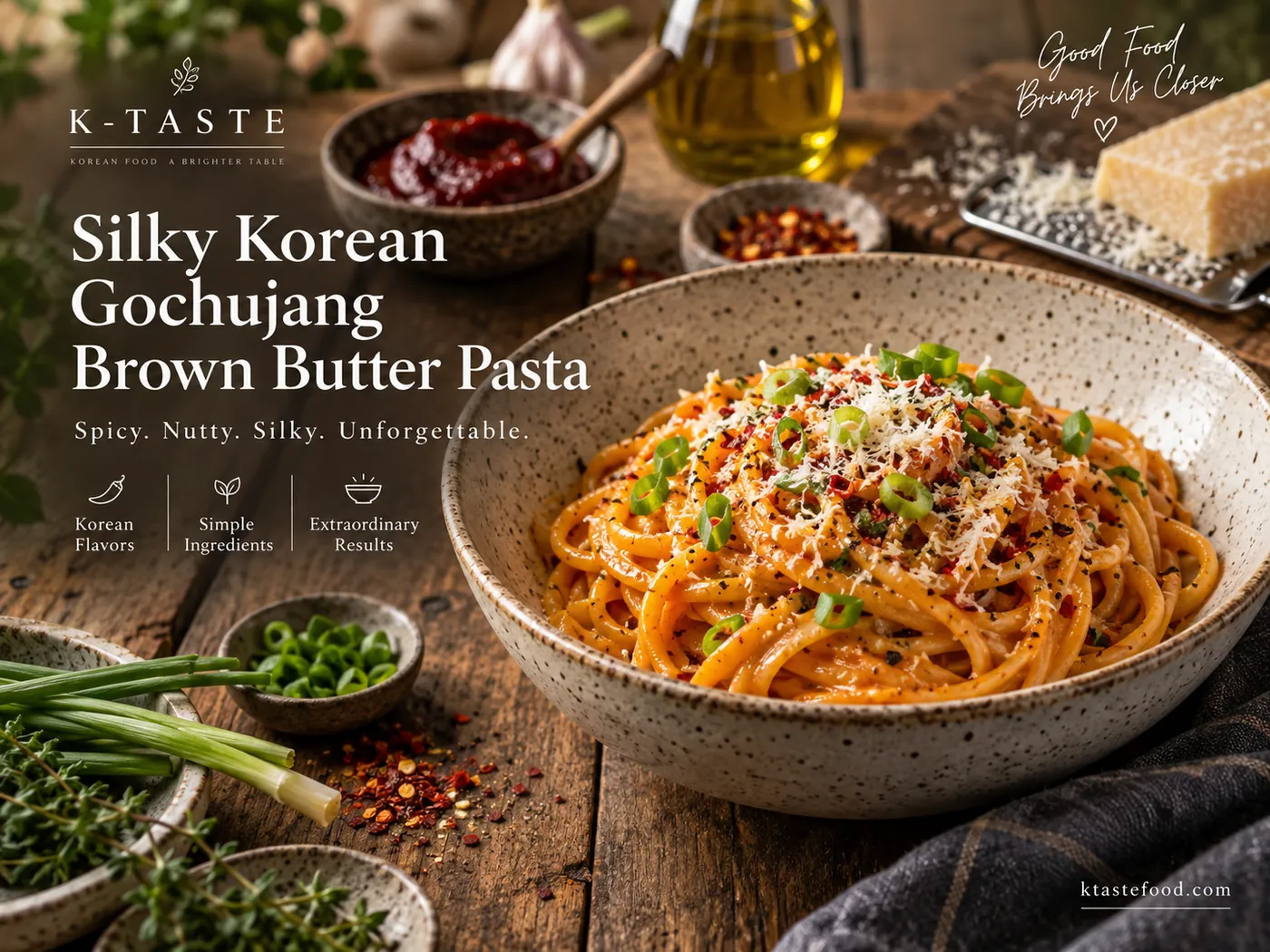
Silky Korean Gochujang Brown Butter Pasta
Noodles · 30 min
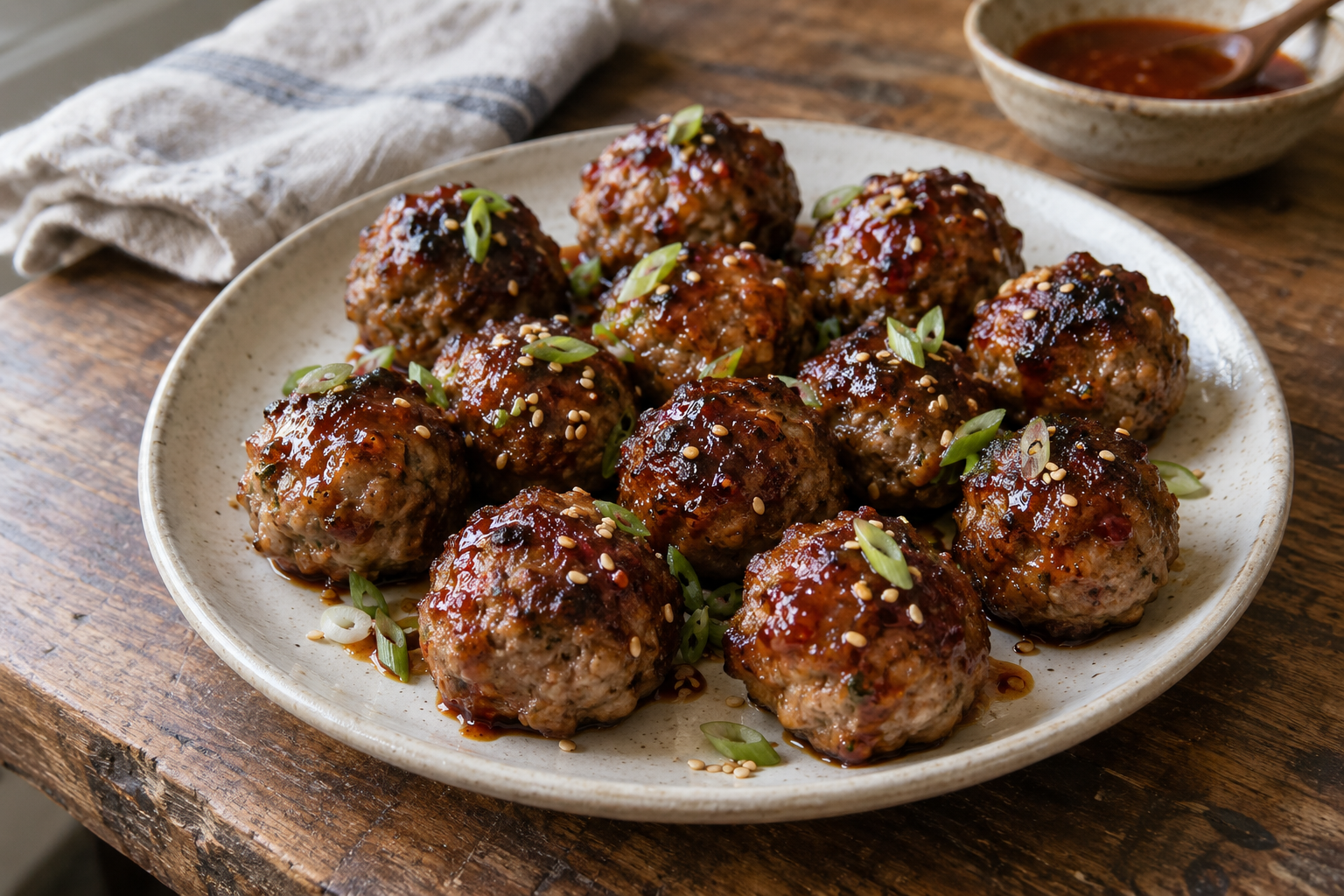
Oven-Baked Gochujang Meatballs with Asian Pear
Meat · 45 min
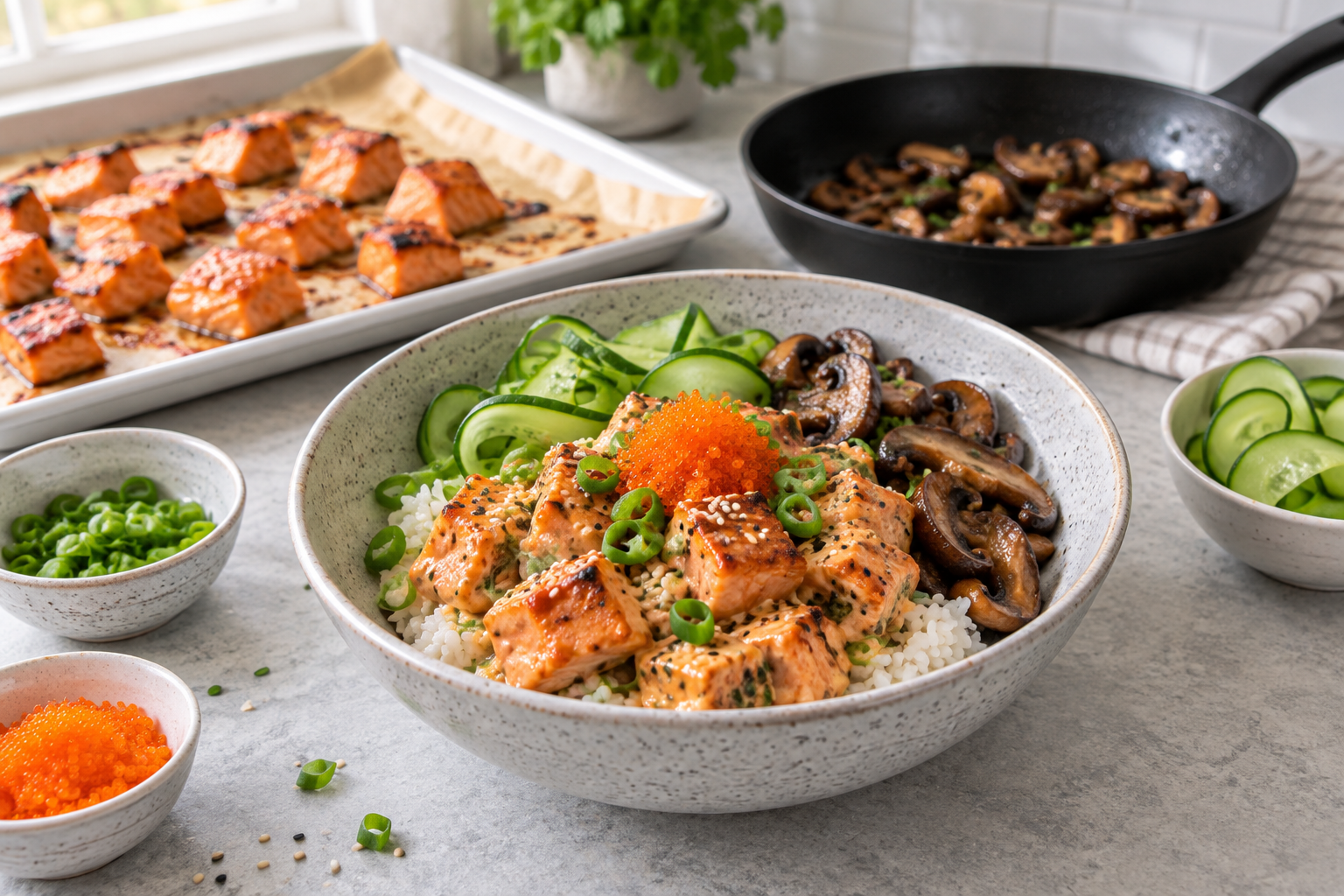
Creamy Gochujang Salmon Rice Bowl with Tobiko
Rice · 30 min
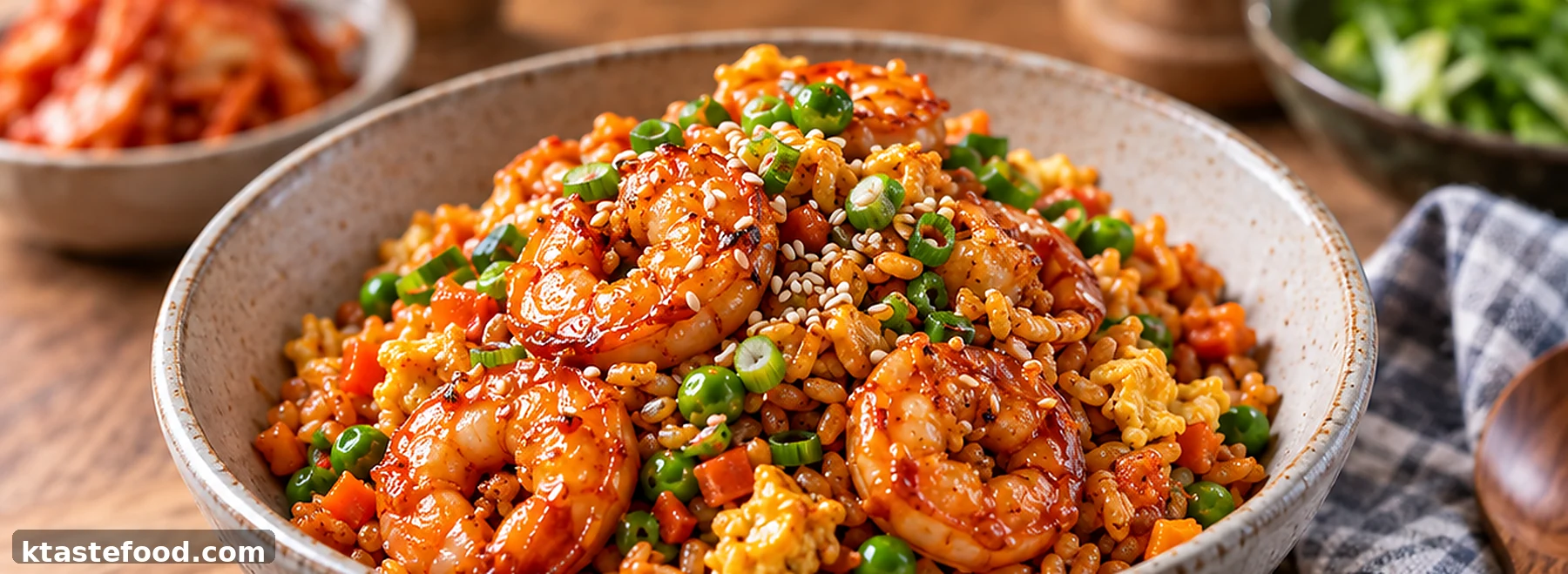
The Best Korean Gochujang Chili Oil Shrimp Fried Rice (Saeu Bokkeumbap) – Spicy, Savory & Ready in 20 Minutes
Rice · 20 min
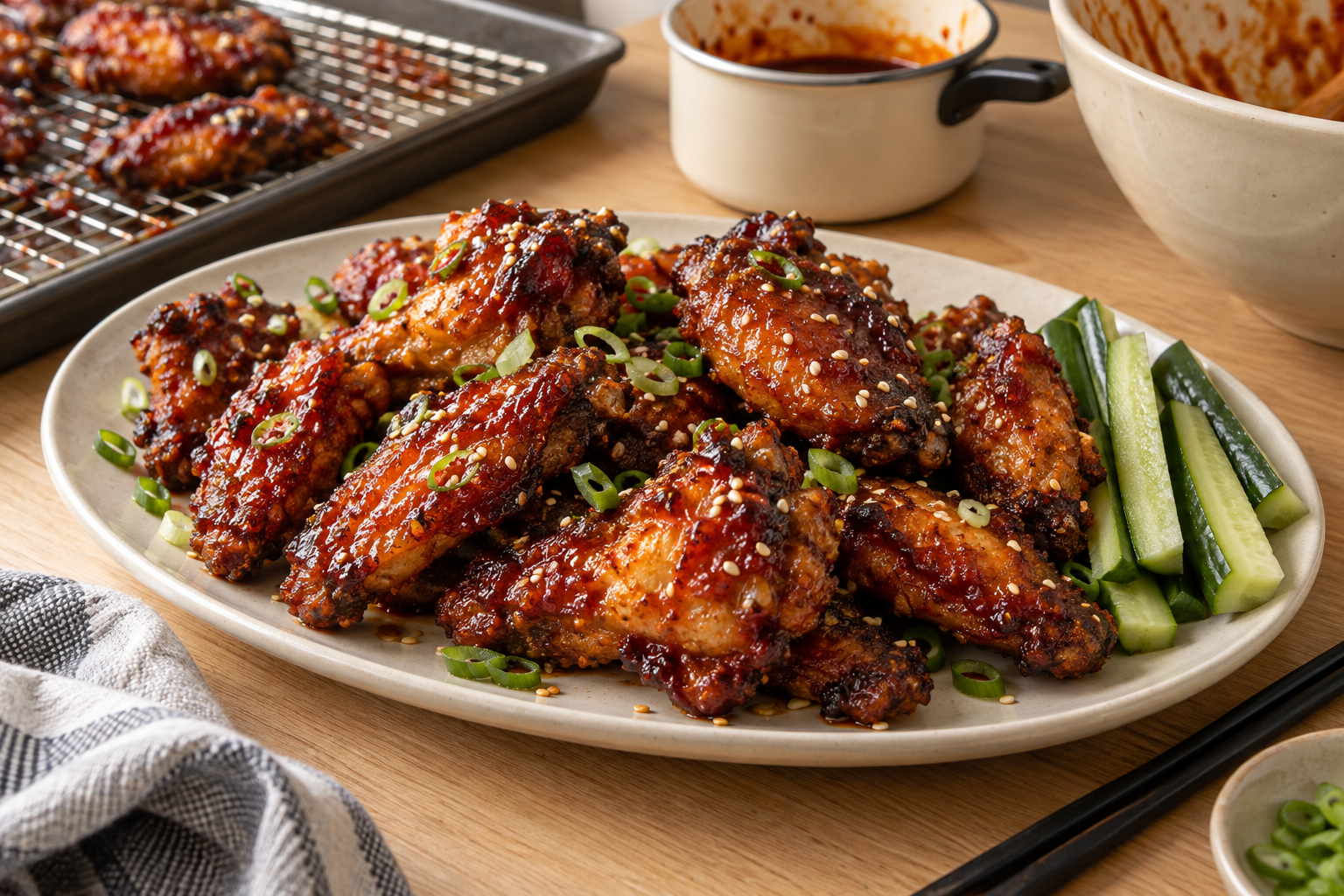
Crispy Oven-Baked Honey Gochujang Chicken Wings
Meat · 1 hr 2 min
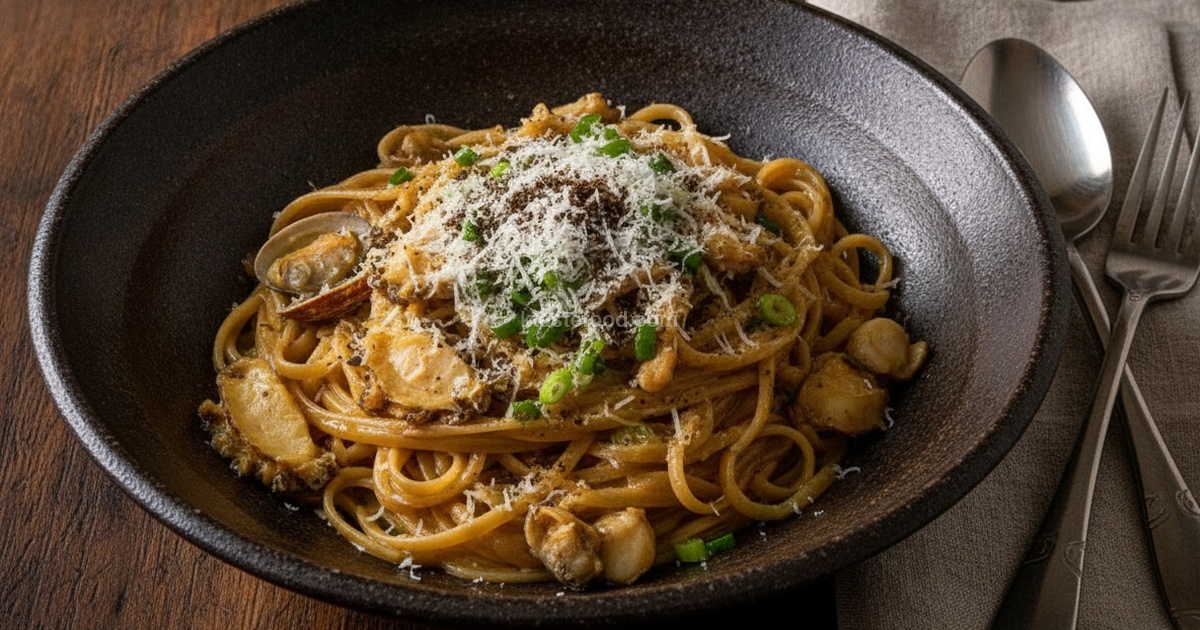
The Ultimate Umami Abalone Butter Pasta: Silky Creamy Korean Seafood Sensation
Noodles · 50 min