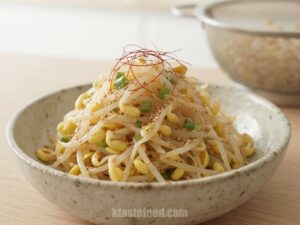
Kongnamul muchim is one of those side dishes that looks almost too simple: boiled soybean sprouts, garlic, green onion, soy sauce, sesame oil, and sesame seeds. The seasoning is easy. The real test is whether the sprouts stay crisp and taste clean instead of watery.
This version uses a covered pot with a small amount of water, followed by a brief cold rinse. Drain the sprouts well before seasoning and the whole dish comes together in about 10 minutes.
Cook the Sprouts Once, Then Stop
Overcooking softens the stems and loosens the yellow heads. Four to five minutes is enough for 300 grams of sprouts. Once the lid goes on, keep it closed until the timer ends, then drain and cool the sprouts promptly.
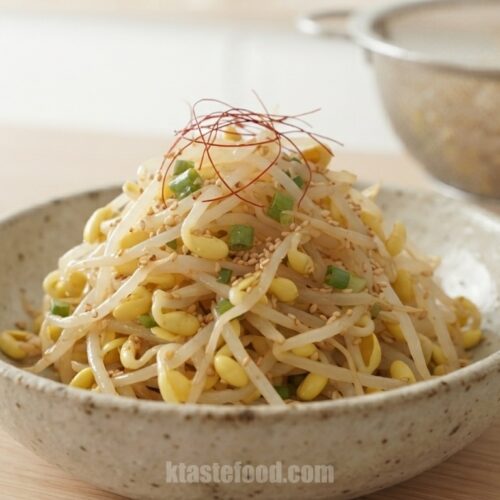
Kongnamul Muchim (Korean Soybean Sprout Side Dish)
Equipment
- 1 Pot with a lid
- 1 Colander
- 1 Mixing Bowl
Ingredients
- 300 g fresh soybean sprouts (kongnamul) about 10.6 oz; rinsed
- 1/2 cup water 120 ml
- 1/2 tsp salt for cooking
- 1 clove garlic minced
- 1 green onion finely sliced
- 1 tbsp toasted sesame oil
- 1 tsp toasted sesame seeds
- 1/2 tsp Korean soup soy sauce or regular soy sauce
- 1 pinch salt or to taste
- 1/2 tsp gochugaru optional, for a spicy version
Instructions
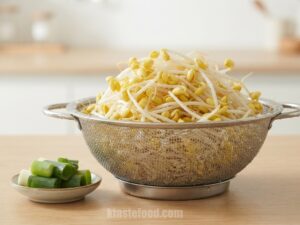
- Rinse the soybean sprouts in cold water. Remove loose seed coats and any damaged sprouts, then drain.
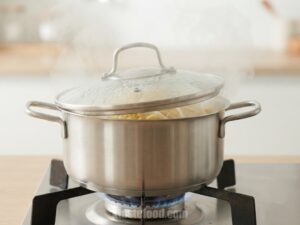
- Add the sprouts, 1/2 cup water, and 1/2 teaspoon salt to a pot. Cover and cook over medium-high heat for 4 to 5 minutes. Once covered, leave the lid closed until the cooking time is complete.
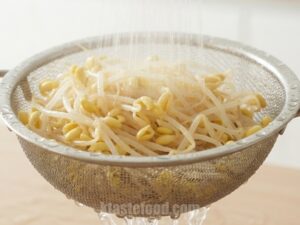
- Drain the sprouts immediately. Rinse them briefly under cold water to stop the cooking, then shake the colander well so the seasoning will not become watery.
- Transfer the sprouts to a mixing bowl. Add the garlic, green onion, soy sauce, sesame oil, sesame seeds, and optional gochugaru.
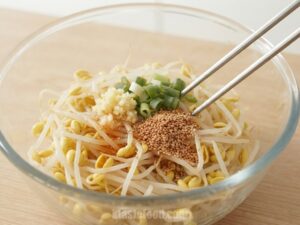
- Toss gently with clean hands or chopsticks until evenly seasoned. Taste and add a small pinch of salt if needed. Serve right away or chill before serving.
Notes
For crisp soybean sprouts
- Once you choose the covered-pot method, keep the lid closed until cooking is finished. Opening it halfway can leave an uneven raw-bean aroma.
- Drain thoroughly after the brief cold rinse. Extra water will dilute the sesame and soy seasoning.
- Toss gently so the yellow heads stay attached and the stems do not bruise.
Storage
Refrigerate promptly in an airtight container. Kongnamul muchim is best served cold or at room temperature while the sprouts are still crisp.Variations
For a mild version, leave out the gochugaru. For a spicy red version, add the optional 1/2 teaspoon gochugaru. For a slightly sweeter finish, add only a few drops of maesil-cheong and taste before adding more. Allergens: Contains soy and sesame.One-step join
Join K-Taste Food
Use your Google account to explore Korean recipes, build meal plans, and keep your K-Taste experience together.
Continue with GoogleSecure sign-in by Google. No separate password needed. Privacy Policy
💡 Before You Start
- Use soybean sprouts: Mung bean sprouts are thinner and cook differently.
- Do not season wet sprouts: Shake the colander thoroughly so the dressing stays concentrated.
- Choose one pot method: This recipe is written for a covered pot, so keep the lid closed until cooking is complete.
🍽️ More Korean Side Dishes
- Dubu Jorim: Spicy-salty braised tofu for a quick banchan plate.
- Korean Bulgogi: Serve this savory beef dish with kongnamul muchim and rice.
❓ Frequently Asked Questions
Q: Why should I keep the lid closed?
This recipe uses the covered-pot method. Keeping the lid closed for the full cooking time helps the sprouts cook evenly without releasing a raw-bean aroma midway.
Q: Can I make it spicy?
Yes. Add about 1/2 teaspoon gochugaru with the garlic, soy sauce, sesame oil, and sesame seeds.
Q: Can I make it ahead?
Yes. Refrigerate it promptly in an airtight container and serve it cold or at room temperature while the sprouts are still crisp.
Cook’s Tip: Season only after the sprouts have drained well. A spoonful of water left in the bowl can flatten the garlic, sesame, and soy flavors.
🏷️ Recipe Keywords & Dietary Tags:
More recipes to cook next
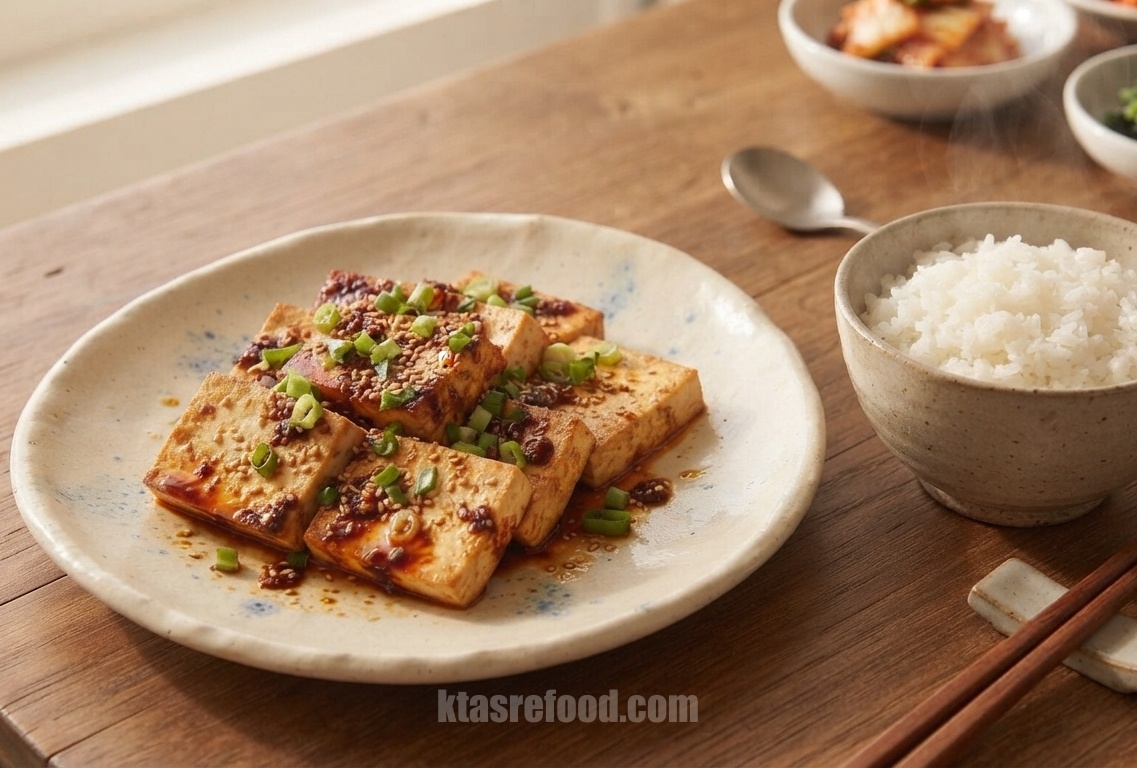
The Best Korean Braised Tofu (Dubu Jorim) – Savory, Spicy & Ready in 15 Minutes
Side Dishes · 15 min
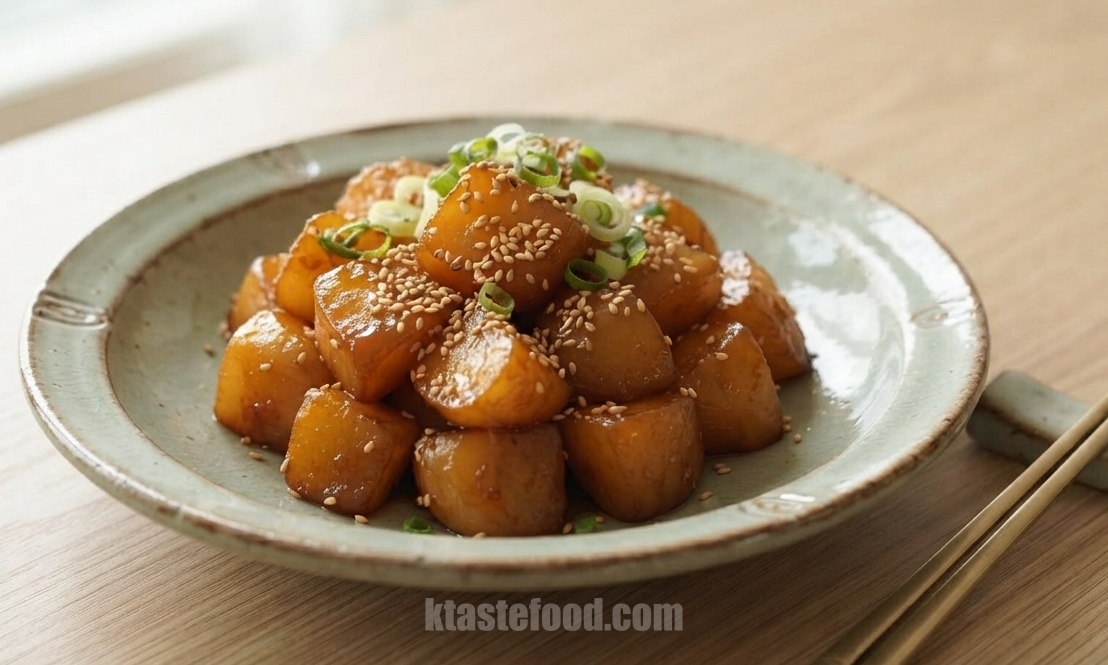
The Best Korean Braised Potatoes (Gamja Jorim) – Sweet, Savory & Ready in 20 Minutes
Side Dishes · 30 min
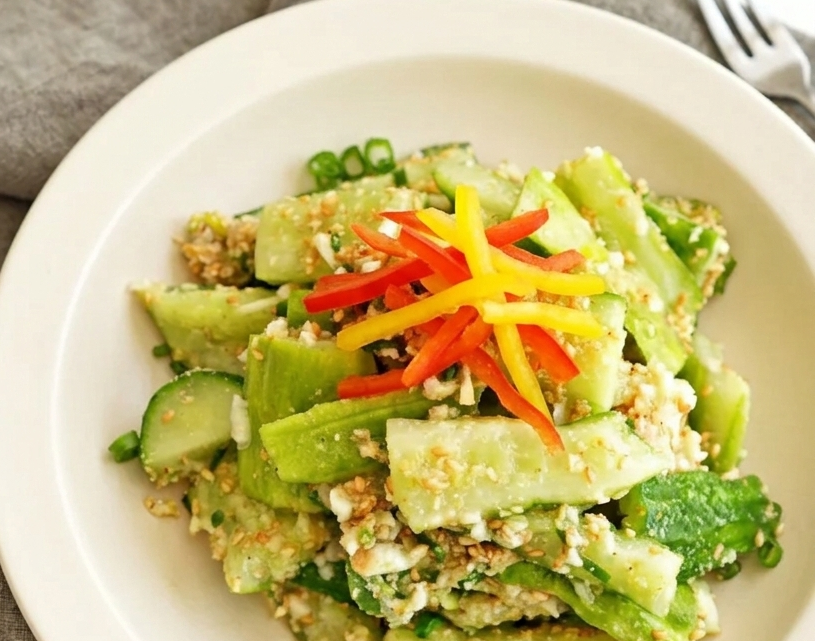
Smacked Cucumber Salad
Side Dishes · 0 min
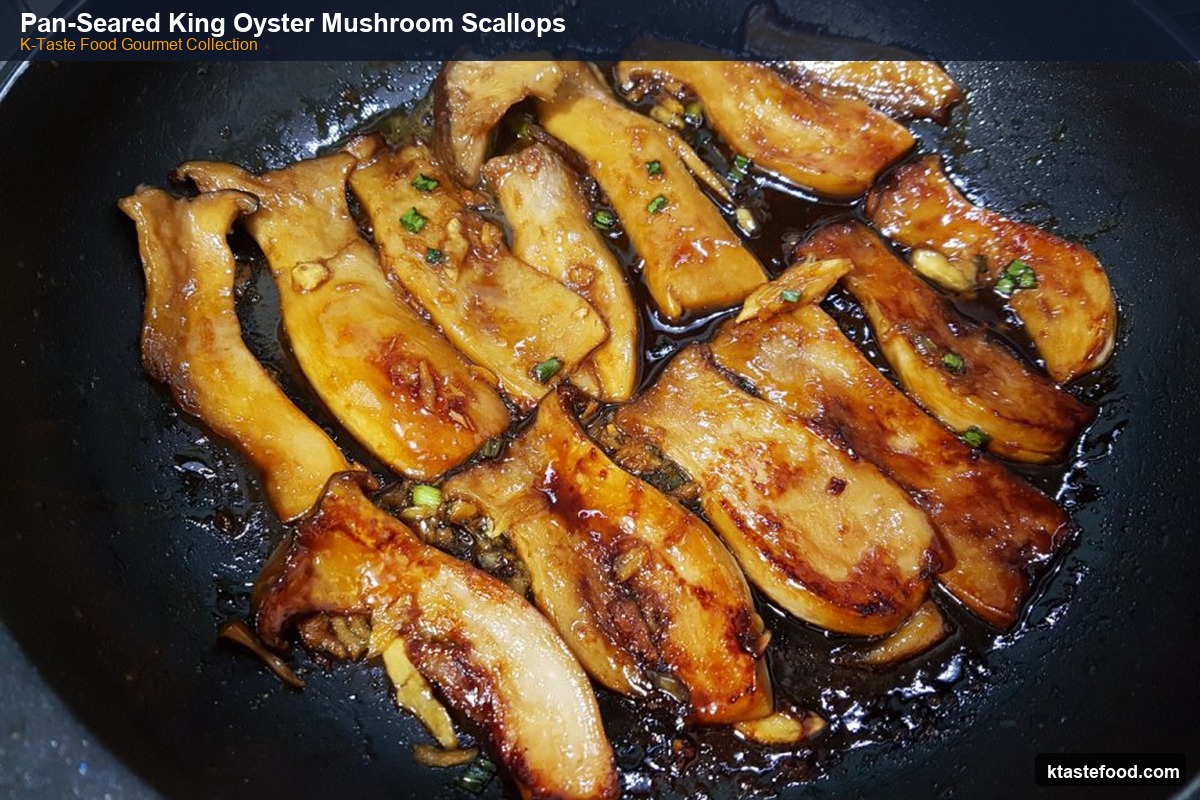
Pan-Seared King Oyster Mushroom Scallops with Soy-Butter Glaze (간장버터 새송이구이)
Side Dishes · 15 min

The Ultimate Guide to Savory & Sweet Stir-Fried Fish Cakes (Eomuk Bokkeum)
Side Dishes · 10 min
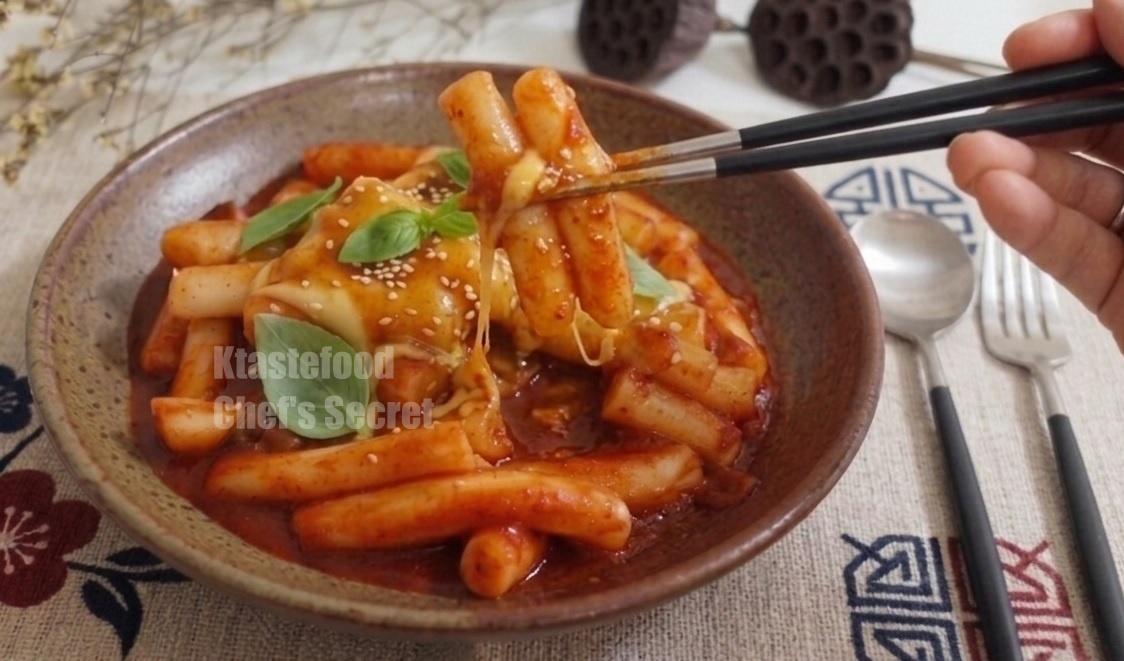
10-Minute Authentic Tteokbokki: The Ultimate K-Drama Soul Food Recipe
Side Dishes · 0 min