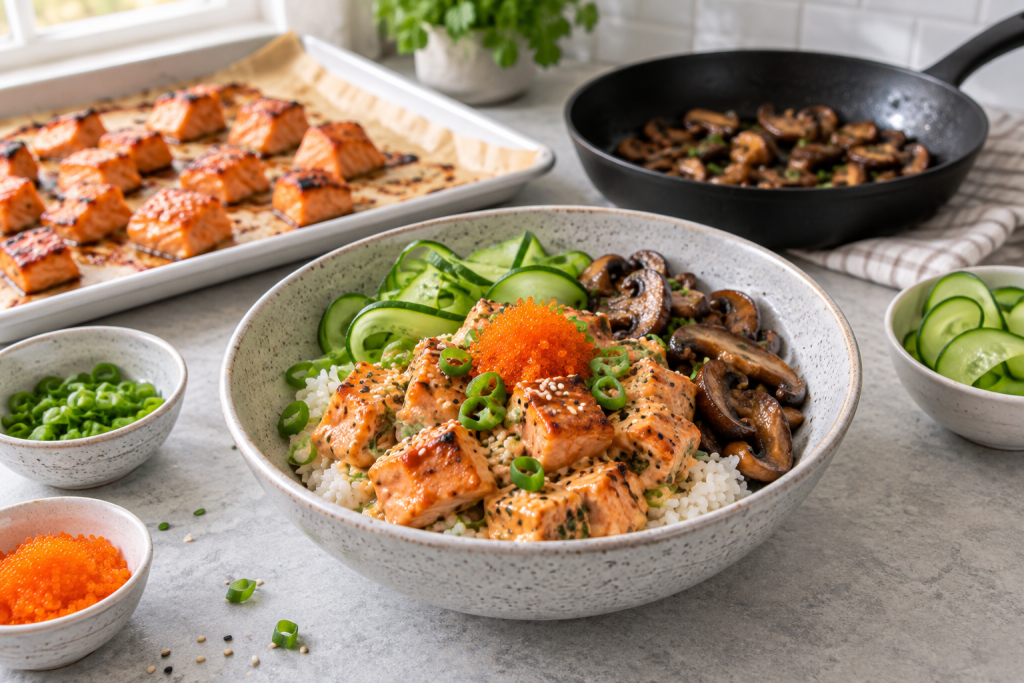
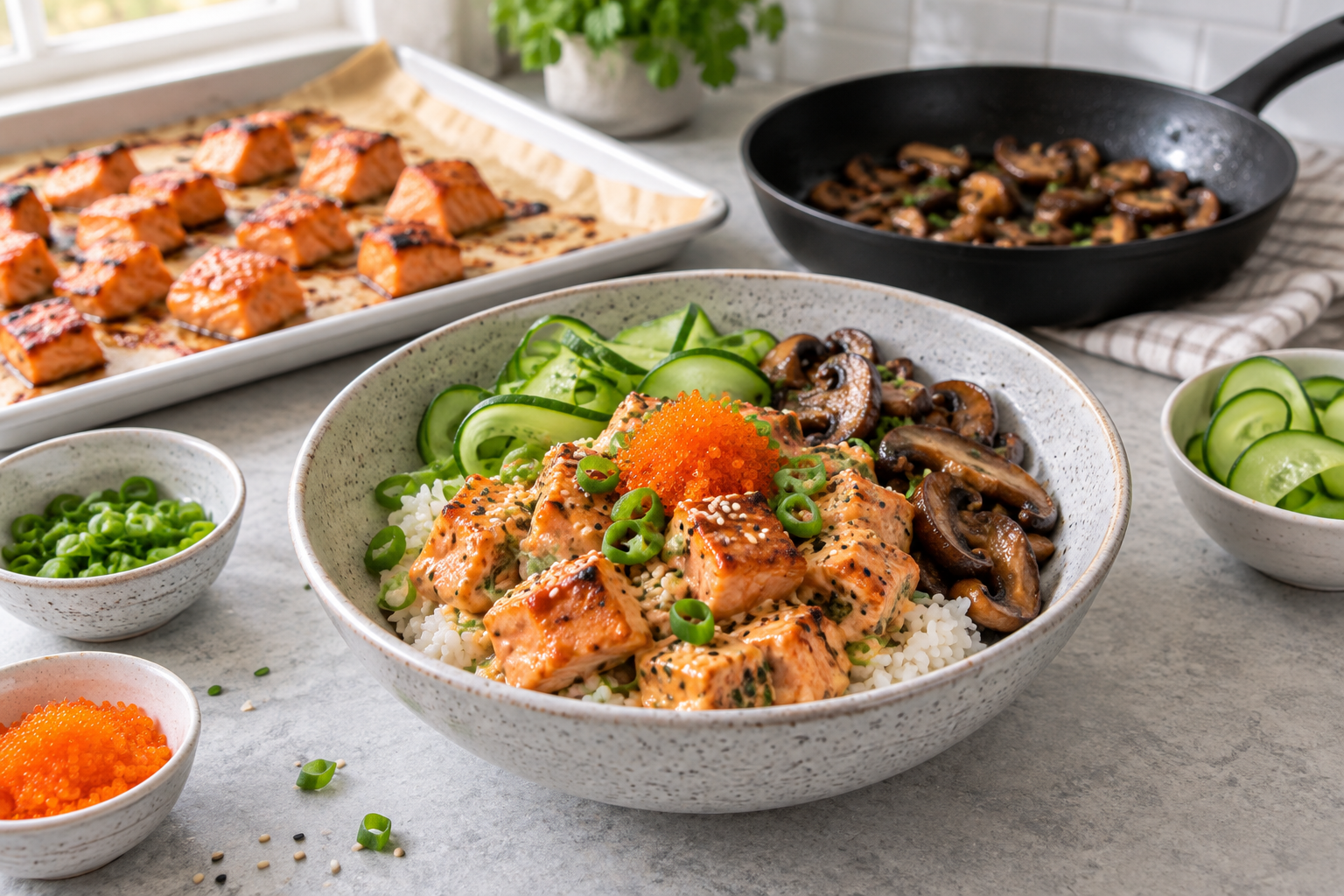
This bowl started with a simple idea: keep the salmon spicy but not bury it under gochujang. Three tablespoons of cream soften the sauce, while a small amount of Tabasco adds heat and acidity. The tobiko goes on after cooking, and the mushrooms are browned separately so they do not steam beside the salmon.
How the Creamy Gochujang Sauce Works
Mix the sauce once, then reserve two tablespoons before it touches the raw fish. Most of the sauce seasons the salmon for roasting; the clean portion is brushed on near the end. That keeps the coating moist without reusing raw-fish marinade.
Creamy Gochujang Salmon Rice Bowl with Tobiko
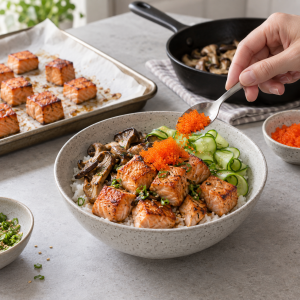
Roasted salmon in a lightly creamy gochujang sauce, served with rice, cucumber, browned mushrooms, and tobiko. Allergens: fish, milk, soy, and sesame.
Keep salmon refrigerated until preparation, prevent cross-contamination, cook to 63°C (145°F), and refrigerate leftovers within 2 hours. Tobiko should remain chilled until serving.
🛒 Ingredients (Dual Measurements)
- 450 g (1 lb) skinless salmon fillet, cut into 3 cm (1 1/4-inch) cubes
- 20 g (0.7 oz / about 1 tbsp) gochujang
- 45 ml (3 tbsp) heavy cream
- 2.5 ml (1/2 tsp) Tabasco sauce, plus more only after tasting
- 2.5 ml (1/2 tsp) toasted sesame oil
- 5 ml (1 tsp) rice vinegar or fresh lime juice
- 7 g (0.25 oz / 1 tsp) honey, optional
- 5 g (0.18 oz / 1 clove) garlic, finely grated
- 200 g (7 oz / about 3 cups sliced) shiitake and oyster mushrooms
- 15 ml (1 tbsp) neutral cooking oil
- 5 g (0.18 oz / about 1 tsp) unsalted butter
- 370 g (13 oz / about 2 cups) warm cooked short-grain rice
- 150 g (5.3 oz / about 1 small) cucumber, shaved into ribbons
- 25 g (0.9 oz / about 2 tbsp) tobiko
- 15 g (0.5 oz / about 1/3 cup) thinly sliced scallion
- 5 g (0.18 oz / about 2 tsp) toasted sesame seeds
- 1 lime, cut into wedges, optional
Step-by-Step Instructions
Step 1: Prepare the salmon: Heat the oven to 220°C (425°F) and line a rimmed baking sheet with parchment. Pat the salmon dry before cutting it into even 3 cm (1 1/4-inch) cubes. Keeping the pieces close in size helps them finish at the same time.
Step 2: Mix and divide the sauce: Whisk the gochujang, cream, Tabasco, sesame oil, rice vinegar, optional honey, and garlic until smooth. Before the sauce touches the raw salmon, spoon 30 ml (2 tbsp) into a separate clean bowl and refrigerate it. This portion is for finishing.
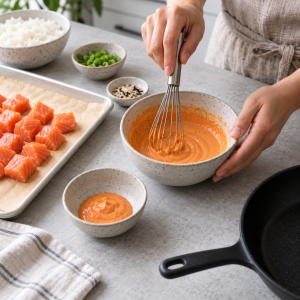
Step 3: Coat the salmon: Toss the salmon with the sauce left in the mixing bowl. Arrange the cubes on the prepared sheet with space between them and leave them for 10 minutes while the oven finishes heating. Discard any sauce remaining in the raw-salmon bowl.
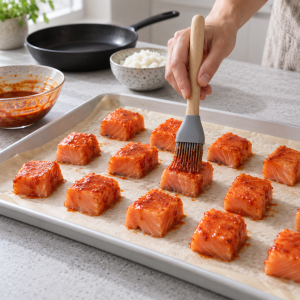
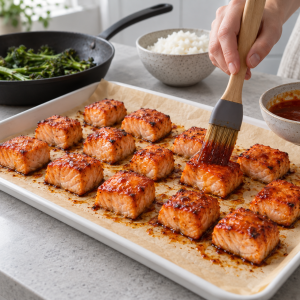
Step 4: Roast and finish the salmon: Roast for 7–9 minutes, depending on the size of the cubes. Brush the salmon with the clean reserved sauce and return it to the oven for 1–2 minutes. The coating should look set and lightly browned rather than black. Cook salmon to 63°C (145°F) at the thickest piece.
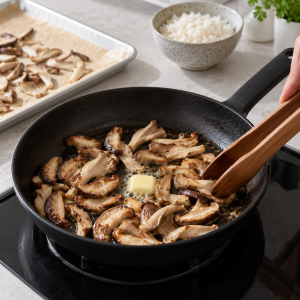
Step 5: Brown the mushrooms: While the salmon cooks, heat a wide skillet over medium-high heat. Add the neutral oil and spread the mushrooms in one layer. Leave them alone for 1–2 minutes, turn, and cook until browned. Add the butter for the final 30 seconds, then take the skillet off the heat.
Step 6: Prepare the bowls: Divide the warm rice between two bowls. Add the cucumber ribbons to one side and the browned mushrooms to the other. Keep the components separate so the cucumber stays crisp.
Step 7: Add the salmon: Place the roasted salmon cubes over the rice. If any of the clean finishing sauce remains, spoon a small amount over the salmon. Do not use sauce that came into contact with raw fish.
Step 8: Add tobiko and serve: Spoon the tobiko over the salmon only after cooking. Finish with scallion, sesame seeds, and optional lime. Serve right away, with extra Tabasco at the table rather than mixed into the whole bowl.
Join K-Taste Food
Sign in with Google to explore exclusive Korean recipes, create custom meal plans, and get instant updates.
💡 A Few Useful Swaps
- Heavy cream: Full-fat coconut milk works but gives the sauce a coconut aroma.
- Tobiko: Leave it out for a lower-salt bowl; do not replace it with a fabricated garnish.
- Mushrooms: Use shiitake, oyster, or cremini mushrooms in the same total weight.
🍽️ What Goes Well With It
- Serve with Korean smacked cucumber salad for a cool, crisp contrast to the creamy sauce.
- For a mild side, try silken tofu and shrimp steamed egg. Cold barley tea also works well.
❓ Frequently Asked Questions (FAQ)
Q: Can I replace the heavy cream?
Full-fat coconut milk works, but it adds a noticeable coconut flavor. For a more neutral result, use unsweetened cooking cream.
Q: Why is part of the sauce reserved first?
The reserved sauce never touches raw salmon, so it can safely be used for the final glaze. Discard sauce left in the bowl used for raw fish.
Q: Can I leave out the tobiko?
Yes. The bowl will be less salty and will lose the popping texture, but the salmon and mushrooms still make a complete meal.
Q: How spicy is this bowl?
Half a teaspoon of Tabasco gives gentle heat and acidity. Add more at the table after tasting, because gochujang brands vary in spice level.
Serving Tip: Add the tobiko at the table so it stays cold and keeps its popping texture.
🏷️ Recipe Keywords & Dietary Tags: #Gochujang Salmon #Salmon Rice Bowl #Tobiko #Korean Fusion #Quick Dinner