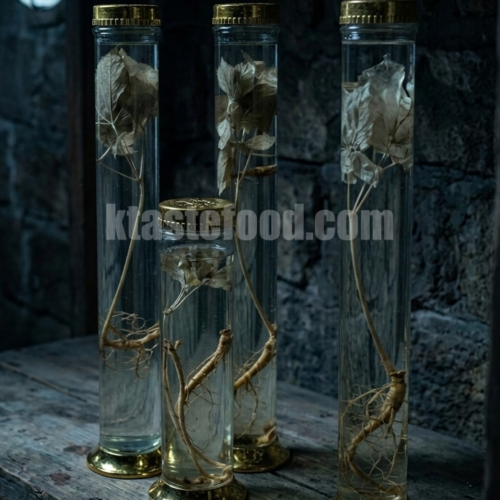
The 15-Year Elixir: Handcrafted Korean Wild Ginseng Liquor (Sansam-ju) Recipe
Discover the secret to crafting a premium, traditional Korean Wild Ginseng Liquor (Sansam-ju). Handcrafted with rare 10-15 year old wild ginseng, this ancient medicinal elixir digitally records the sacred devotion of Korean heritage.
Equipment
- 3 Glass Infusion Bottles (900ml - 1L / 30 - 34 fl oz, Slim fit)
- 1 Soft-bristled Brush
- 1 Drying Tray or Mesh Strainer
Ingredients
- 3~5 root Fresh Ginseng or Wild Ginseng (Sansam) Fresh ginseng roots are essential. If possible, seek out 10-15 year old wild ginseng (Sansam) for the best medicinal potency. Sourcing Tip: Please do not use generic American Ginseng or processed powders found online. Authentic Korean ginseng is best sourced from major Korean specialty markets (e.g., H-Mart) or specialized herbal clinics in your area. If you cannot find high-quality fresh roots, please wait until you can—quality is the soul of this elixir.
- 7~8 Bottles (360ml / 12 fl oz each) Korean Soju (Chamisul Fresh, Standard 360ml Bottle) Prepare 7 to 8 standard green bottles of Chamisul Fresh. This lower ABV (16.5%) allows the wild ginseng to age smoothly over 1 year without a harsh alcohol burn.
Instructions
- Step 1: Source and Prepare the GinsengSource 3 to 5 roots of either fresh ginseng (Susam) or 10-15 year old wild ginseng (Sansam). While premium wild ginseng delivers the ultimate deep flavor and medicinal potency, standard fresh ginseng is also an excellent and accessible option for general readers.
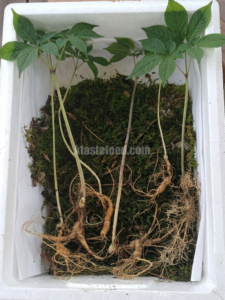
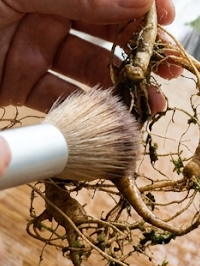
- Step 2: Wash Gently to Preserve the Aroma and PotencyGently wash the ginseng roots under cold running water using a soft brush, focusing only on removing the soil. Do not scrub hard or soak them in water for too long. Excessive scrubbing or prolonged washing will wash away the precious aroma and active medicinal compounds, leaving the ingredients flavorless.
- Step 3: Air-Dry the Ginseng and Sterilize the Glass BottlesPlace the washed ginseng roots in a basket and let them air-dry in the shade for about 6 hours to completely remove all surface moisture. Meanwhile, rinse the prepared glass bottles thoroughly with water. Then, pour about 100ml of Chamisul Fresh soju into each bottle, swirl it around to rinse out any remaining tap water and moisture, and discard the liquor.
- Step 4: Place the Ginseng Deep into the BottlesCarefully insert the dried ginseng roots into the sterilized glass bottles, pushing them down as deeply as possible so that the tips of the roots touch the very bottom of the bottle. Placing them firmly ensures the ginseng stays elegantly positioned and visually stunning once the liquor is added.
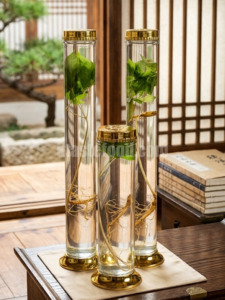
- Step 5: Fill with Soju and Close the LidPour the prepared Chamisul Fresh soju into the glass bottles until the ginseng is completely submerged, including the uppermost leaves. Ensure the liquor fills the bottle to the very top so no parts are exposed to air, and then firmly close the lid.
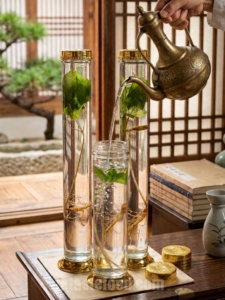
- Step 6: Place in Sunny Spots to Eliminate Raw Grass OdorPlace the sealed bottles in a bright, sunny area for 5 to 7 days. This specific exposure to sunlight quickly breaks down the chlorophyll in the ginseng leaves, which effectively eliminates any raw, unpleasant grassy odor and ensures a clean, smooth base flavor.
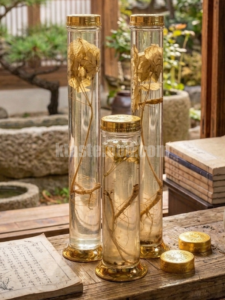
- Step 7: Age in a Cool, Dark Place for 1 YearAfter the initial week in the sun, move the bottles to a cool, dark place away from direct sunlight (such as a pantry or a cellar). Let the liquor age patiently for about 1 year. During this time, the active components of the wild ginseng will deeply infuse into the soju, transforming it into a premium traditional spirit with a smooth finish.
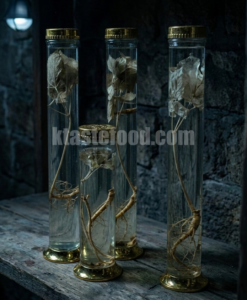
Notes
In May, during those fleeting moments when the brisk spring air was reluctant to welcome the summer heat, I ventured into the deepest corners of the Korean Peninsula. Searching for the ultimate terroir where wild ginseng thrives, I traversed Gangwon, Gyeongbuk, Chungbuk, Jinan, and Goksung. For days, I pushed through jungle-like, primeval forests, spending 10 to 12 hours a day on foot and by wheels.
There were days when torrential rain fused with my sweat, and I slipped on treacherous, moss-covered boulders. There were days under a scorching sun that drenched me entirely. Though I am someone who sings of nature and loves the wilderness, the mountains this year were relentlessly harsh, almost to the point of frustration.
Yet, the deep mountains reveal secrets only shared with ancient gatherers and mountain spirits. Hidden deep in the ridges, ancient ginseng cultivation sites from the Joseon Dynasty still appear, and wild animals roam. Nature is mystical, and it is awe-inspiring to realize that Korea's turbulent history and sacred energy (Jeong-gi) are carved into these peaks. On the mid-slopes of Mount Mohu in Jeonnam, the faint footprints of ancestors who cultivated ginseng from the Goryeo to the Joseon Dynasty still remain. It makes me wonder: with no weather forecasts, and in a time when Siberian tigers, leopards, wildcats, and venomous vipers ruled these woods, how did those ancient souls harvest this sacred root? Their resilience is truly legendary.
This rich history inevitably connects to the legacy of Kaesong Ginseng, the legendary root that put 'Korean Ginseng' on the global map. Cultivated with meticulous care and traded across empires by the historic Kaesong merchants, it became the world’s gold standard for quality, renowned for its incomparable density, aroma, and medicinal potency. The unyielding spirit of those ancient merchants and cultivators flows directly into the modern heritage of Korean ginseng mastery.
With the utmost reverence for that noble spirit, I record this recipe in this digital space. This formulation was passed down to me by a master Simmani (traditional Korean wild ginseng hunter) who has navigated these rugged terrains for over 50 years. The groundbreaking technique in Step 5—exposing the bottles to the sun to break down chlorophyll and erase the raw grass odor—is a secret born from his half-century of wisdom. I invite you to experience the history, the legacy of Kaesong, and the sacred energy of the Korean Peninsula in a single glass.
Many ask: what makes the Korean Peninsula the ultimate, unrivaled geological epicenter for wild ginseng? The answer lies in its distinct taxonomy and evolutionary survival.
Mass-produced cultivated ginseng and foreign varieties are fundamentally different species from Korean wild ginseng. For instance, American ginseng is scientifically named Panax quinquefolius, and Chinese Sanchi ginseng is Panax notoginseng. In sharp contrast, only the authentic ginseng of the Korean Peninsula holds the proud and prestigious scientific name, "Panax ginseng Meyer." Here, the genus name Panax literally translates to "all-healing" or a "cure-all" (the ultimate miracle elixir) in Greek.
Driven by this taxonomic distinction, the types and structures of saponins—known as ginsenosides—vary drastically between these species. While foreign ginsengs possess a limited and narrow spectrum of saponin types, the Korean Panax ginseng boasts an overwhelmingly rich, diverse, and perfectly balanced spectrum of ginsenosides.
More importantly, there is an immense evolutionary chasm between cultivated ginseng (Insam) raised in sheltered fields and true wild ginseng (Sansam) born of nature. Left entirely without human protection in the unforgiving wilderness, wild ginseng must endure a brutal, life-or-death struggle against pests, diseases, and extreme climate shifts. To survive over decades in these harsh conditions, the wild root hyper-concentrates its internal composition and secretes powerful chemical defenses. As a result, its total saponin content skyrockets to levels incomparable to cultivated or foreign varieties. Furthermore, it densely synthesizes rare, highly potent ginsenosides—such as Rg3, Rh2, and Compound K—that are virtually absent or scarce in ordinary ginseng. This raw evolutionary survival mechanism is the ultimate secret that infuses Korean wild ginseng with its legendary, profound medicinal potency.
### 💡 Pro Tips for the Ultimate Experience
* **To Strain or Not to Strain? (1 Year Later):** After 1 year of aging, the liquor is fully matured. To maintain a perfectly balanced flavor and prevent the liquor from becoming overly bitter, you may strain the liquid and remove the ginseng roots. However, leaving the roots inside for visual display is also perfectly fine and widely practiced for premium presentation.
* **How to Serve:** To fully appreciate the sacred aroma and complex medicinal potency of *Panax ginseng*, serve this liquor at room temperature in a small traditional glass. Sip it slowly before or after a meal as a premium traditional health tonic, rather than diluting it with ice or mixers. ### 💡 Essential Advice: Sourcing Your Ingredients Many readers ask me where to find authentic, high-quality fresh ginseng roots for this recipe. Please consider these points before you start:
* **How to Serve:** To fully appreciate the sacred aroma and complex medicinal potency of *Panax ginseng*, serve this liquor at room temperature in a small traditional glass. Sip it slowly before or after a meal as a premium traditional health tonic, rather than diluting it with ice or mixers. ### 💡 Essential Advice: Sourcing Your Ingredients Many readers ask me where to find authentic, high-quality fresh ginseng roots for this recipe. Please consider these points before you start:
- Avoid Generic Substitutes: Do not be tempted to use American Ginseng (Panax quinquefolius) or processed powders found on mass-market websites. These are chemically and medicinally distinct from the Korean Panax ginseng Meyer. Using substitutes will not yield the traditional medicinal elixir we are creating here; it will only lead to disappointment.
-
Where to Find 'Real' Fresh Roots:
- Skip Local 'Dry' Herbal Shops: Standard herbal shops sell dried goods and rarely carry fresh roots, as they require strict cold-chain storage.
- Check Korean Specialty Markets: Large Korean supermarkets (like H-Mart) in major cities are your best local resource. They often import fresh roots directly from Korea.
- The Gold Standard—Direct Sourcing: The most reliable way to obtain high-quality roots—especially if you want the potency of 10-15 year old wild ginseng—is to source them directly from specialized Korean exporters. It takes a little more effort, but for a 1-year aging ritual, you deserve the real thing.
- The Path of Patience: If you cannot find authentic Korean roots immediately, do not rush. Wait until you can secure the right quality. This elixir is a celebration of Korean heritage; it deserves only the finest ingredients.
- 900ml - 1L (30 - 34 fl oz). A 'Slim fit' is essential to showcase the root's silhouette. Click here for my top recommendation: the perfect 1L elegant jar.
- Essential for cleaning delicate ginseng roots without damaging the skin. Get the recommended brush here.
- Necessary for properly air-drying the ginseng after washing to prevent mold. Get the recommended tray here.