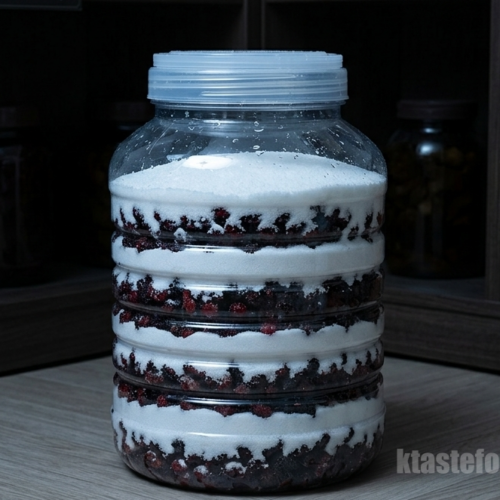
No-Cook Magic: Traditional Korean Mulberry Cheong (A Sister's Sacred Recipe)
Stop boiling your fruit! Discover a centuries-old Korean fermentation technique passed down by my sister. Using just 2 ingredients and the natural power of time, this raw mulberry syrup creates an incredible 'flavor bomb' for your teas, cocktails, and desserts.
Equipment
- 1 20L Glass Jar or Food-Grade Fermentation Container Make sure it is thoroughly sterilized and 100% dry. A glass or high-quality food-grade plastic container works best for long-term fermentation.
- 1 Long-Handled Stirring Spoon or Ladle Must be completely dry. Used to stir the mixture from the very bottom during the first 2 weeks to ensure the sugar dissolves perfectly.
Ingredients
- 16.5 lbs Wild-foraged Mulberries or Mulberries Freshly hand-picked, thoroughly washed, and 100% air-dried with absolutely no moisture remaining.
- 16.5 lbs White Granulated Sugar Used in a strict 1:1 ratio with the mulberries to ensure perfect traditional fermentation and long-term preservation.
Instructions
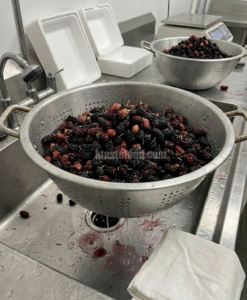
- Gently wash the wild-foraged mulberries in cold water to remove any forest dust or debris. Drain them completely in a colander.
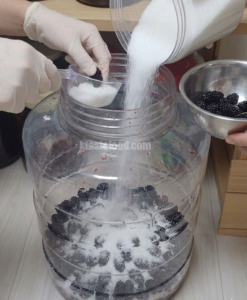
- In your thoroughly sterilized and bone-dry 20L container, begin layering the mulberries and sugar in a 1:1 ratio. Alternate layers of berries and sugar, making sure to save a generous amount of sugar to completely cover and seal the very top layer.
- In your thoroughly sterilized and bone-dry 20L container, begin layering the mulberries and sugar in a 1:1 ratio. Alternate layers of berries and sugar, filling the container only up to about 70% to 80% of its capacity to allow proper breathing space. Finally, after adding the last batch of mulberries, pour a thick, generous layer of sugar over the very top to completely cover and bury the berries. This heavy sugar seal is crucial as it blocks oxygen, preventing mold, spoilage, and oxidation.
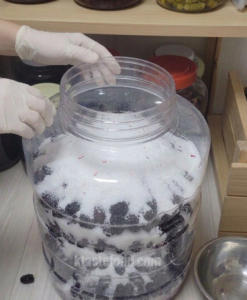
- Close the container lid slightly loosely (or use a gas-release valve) so the natural gases can escape safely. Immediately move the container to a cool, dark place out of direct sunlight, allowing the wild microbes to begin their fermentation in the shade.
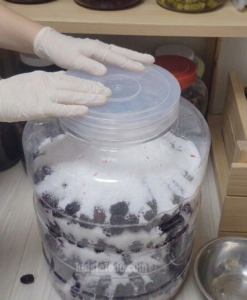
- During the 100-day aging process, the first month is the most critical. Every 3 days for the first 30 days, insert a completely dry, long-handled ladle deep into the container and stir thoroughly from the very bottom. This ensures the heavy sugar dissolves perfectly and helps the wild mulberries ferment beautifully.
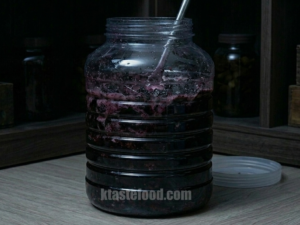
- After the first month of active stirring, let the magic happen. Allow the cheong to ferment undisturbed in the dark for the remaining period, reaching a total of 100 days. Once complete, strain out the liquid syrup from the solid berries. Do NOT throw away the leftover berries! Store the pure ruby syrup in a glass bottle for drinks, and save the plump, sugar-soaked berries for baking and toppings.
Notes
👑 Move Over, Blueberries! Meet the True King of Berries.
If you walk into any health food store in the West, you’ll see Blueberries wearing the "Superfood Crown" like they own the place. Millions of people blend them into smoothies every single morning, believing they’ve found the holy grail of antioxidants. But today, I’m here to tell you a secret that will blow your mind: My wild-foraged mulberries just kicked regular blueberries right out of the stadium. 🥊 Let's look at the raw, unfiltered data before you judge my 7-hour hike in the wild:- The Anti-Aging Showdown: You think blueberries are great for your skin? Wild mulberries pack up to 1.5 times more anthocyanins (the magic purple stuff that stops aging). It's like upgrading from a standard smartphone to a supercomputer.
- The Iron Throne: For anyone needing an energy boost or fighting anemia, listen up. Mulberries contain nearly 5 times more iron than blueberries. Five times!
- The Calcium Secret: Need stronger bones? Mulberries easily double the calcium content of regular blueberries.
- The Secret Weapon (1-DNJ): Here is the ultimate knockout punch. Mulberries contain a rare natural compound called 1-DNJ which scientifically helps block blood sugar spikes. Blueberries? They don't even know what that is.
🏹 The 7-Hour Treasure Hunt
This is exactly why I didn't just casually drive to a local supermarket to buy shiny, water-pumped commercial berries. To capture this supreme nutritional powerhouse at its absolute peak, I spent 7 grueling hours hiking through untamed mountains and fields, hand-picking these wild gems one by one. Because they grew in the harsh, unpredictable embrace of mother nature—and thanks to the perfect timing of no rain the day before—their flavors and nutrients are incredibly concentrated. When you combine this wild superpower with my sister’s traditional 100-day fermentation recipe, you aren't just making a syrup. You are brewing a living, breathing elixir of youth. Sorry, blueberries. You had a good run, but the King has officially reclaimed the throne. 👑🍽️ How to Use Your 100-Day Mulberry Cheong (Culinary Guide)
🍹 1. The Ultimate Beverage Base
Replace artificial syrups and sodas with this all-natural, living enzyme beverage base. It delivers a depth of flavor that commercial berry syrups simply cannot match.-
Mulberry Ade (Refreshing Summer Drink):
- How-to: Fill a tall glass to the brim with ice cubes and pour in 3 Tablespoons (45ml) of your Mulberry Cheong syrup. Top it off with 1 cup (200ml) of chilled sparkling water and stir gently.
- Pro-Tip: Slap a fresh mint leaf and drop it on top to release the aroma. It is the ultimate thirst-quencher for hot summer days.
-
Warm Mulberry Tea (Soothing Cozy Drink):
- How-to: Add 2 Tablespoons (30ml) of Cheong into a mug, pour in 1 cup (200ml) of hot water (around 80°C/175°F), and stir well until fully incorporated.
- Pro-Tip: Perfect for when you feel under the weather. The deep, comforting forest aroma of wild mulberries will instantly warm your soul.
-
Ruby Craft Cocktail (Home Bar Signature):
- How-to: In a cocktail shaker or glass, combine 1 shot (45ml) of Vodka or Gin, 1 Tablespoon (15ml) of Mulberry Cheong, and a squeeze of fresh lemon juice. Shake with ice and top with tonic water.
- Pro-Tip: You’ll get a stunning, Instagram-worthy cocktail with a mesmerizing deep-ruby hue and a complex flavor profile.
🥗 2. The Secret Weapon for Salads
Ditch the boring store-bought dressings. Use the wild, concentrated acidity and sweetness of this cheong to create an artisanal vinaigrette that rivals high-end restaurants.-
Wild Mulberry Vinaigrette:
- How-to (The Golden Ratio): In a small bowl, whisk together 2 Tablespoons of Mulberry Cheong, 3 Tablespoons of extra virgin olive oil, 1 Tablespoon of vinegar (apple cider or white wine vinegar), and a pinch of salt until emulsified.
- Best Pairings: Drizzle generously over bitter or peppery greens like arugula, romaine, or wild chicory. It pairs phenomenally well with salty Feta cheese, creamy Ricotta, or toasted walnuts. This dressing creates a beautiful balance of sweet, savory, and tangy notes.
🥞 3. The Royal Dessert Topping
Why settle for maple syrup when you can crown your desserts with a 100-day fermented, living flavor bomb?-
Morning Yogurt & Oatmeal:
- How-to: Drizzle 1 to 2 Tablespoons of the cheong over unsweetened Greek yogurt or a hot bowl of oatmeal. The rich syrup cuts through the tartness of the yogurt beautifully while packing your breakfast with wild antioxidants.
-
Pancakes & Waffles:
- How-to: Pour the raw syrup in a zigzag pattern over freshly made, warm pancakes, waffles, or French toast for a luxurious, deep-berry sweetness.
-
Mulberry Affogato (The Showstopper):
- How-to: Place a large scoop of premium vanilla bean ice cream in a dessert bowl. Instead of espresso, slowly pour 1 to 2 Tablespoons of cold Mulberry Cheong right over it. The warm elegance of vanilla intertwines with the heavy, dark-berry notes of wild fermentation for an unforgettable dessert.
🥩 4. Glaze for Savory Dishes
In Western culinary traditions, pairing rich meats with sweet-tart berry sauces (like duck with cranberry or pork with raspberry) is highly celebrated. Your mulberry cheong takes this to a whole new level.-
The Wild Meat Glaze:
- How-to: Pan-sear your choice of protein—Pork Tenderloin, Duck Breast, or Chicken Thighs. When the meat is about 90% cooked, reduce the heat to low. Add 2 to 3 Tablespoons of Mulberry Cheong and 1 Teaspoon of soy sauce directly into the pan. Spoon the liquid over the meat continuously as it simmers (Glazing).
- Why it works: The natural enzymes in the cheong act as a tenderizer while completely neutralizing any gamey odors. As the cheong hits the heat, it caramelizes beautifully, locking in the juices, creating a glossy coat on the meat, and infusing every bite with an incredible umami depth.
- "Click here to buy your superfood mulberries on Amazon: https://amzn.to/43fiGSy"
- "For this traditional Korean recipe, you’ll need a spacious container. Check out the 6-gallon mulberry enzyme jar here: https://amzn.to/4e4O0Z5"
- As an Amazon Associate, I earn from qualifying purchases.